
Book Appointment Now

Russian Lip Filler Treatments in London
The mouth plays a central role in facial expression and proportion. Thinning, flattening, or loss of vertical definition — particularly in the upper lip — can alter facial balance in subtle but meaningful ways. Russian lip filler addresses these concerns through a specialised injection technique that restores height, structure, and natural-looking lift without unnecessary bulk.
Unlike traditional augmentation, which often places product toward the border, the Russian technique builds height from the base upward. The result is a refined pout with a clearly defined cupid’s bow, suited to a wide range of facial features and particularly effective for patients with thin lips seeking structured yet understated enhancement.
Consultation and pricing
The final treatment plan and cost are confirmed after consultation and clinical assessment. Pricing depends on lip anatomy, the amount of structure required, product volume, and whether the treatment plan focuses on shaping alone or fuller augmentation.
The figures below are provided for general market guidance only, based on publicly advertised prices reviewed on 9 April 2026 across 3 London clinics. These are not our clinic’s prices and may not include consultation fees, promotional pricing, technique differences, or individual treatment planning.
- Standard Russian lip filler treatment using 1ml: about £299
- Enhanced contouring approach using 1.5ml: about £399
- More advanced shaping and augmentation: about £499
- Separate top-up or review appointments, where offered, may start at about £150
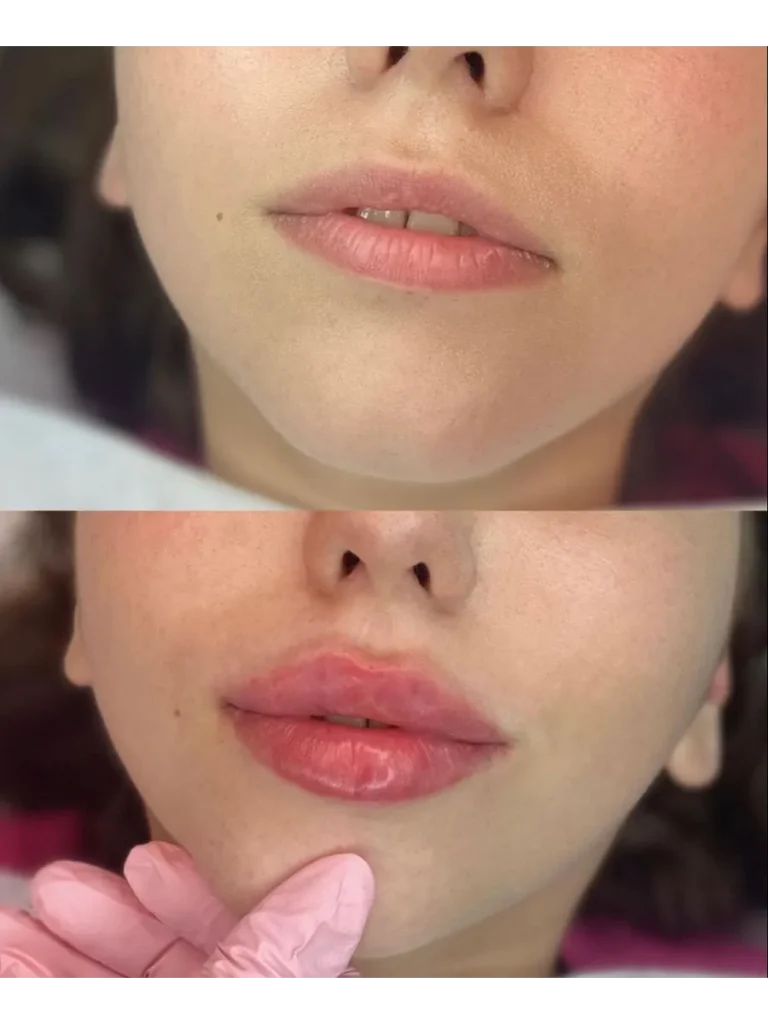
Before and After Russian Lip Filler Treatment
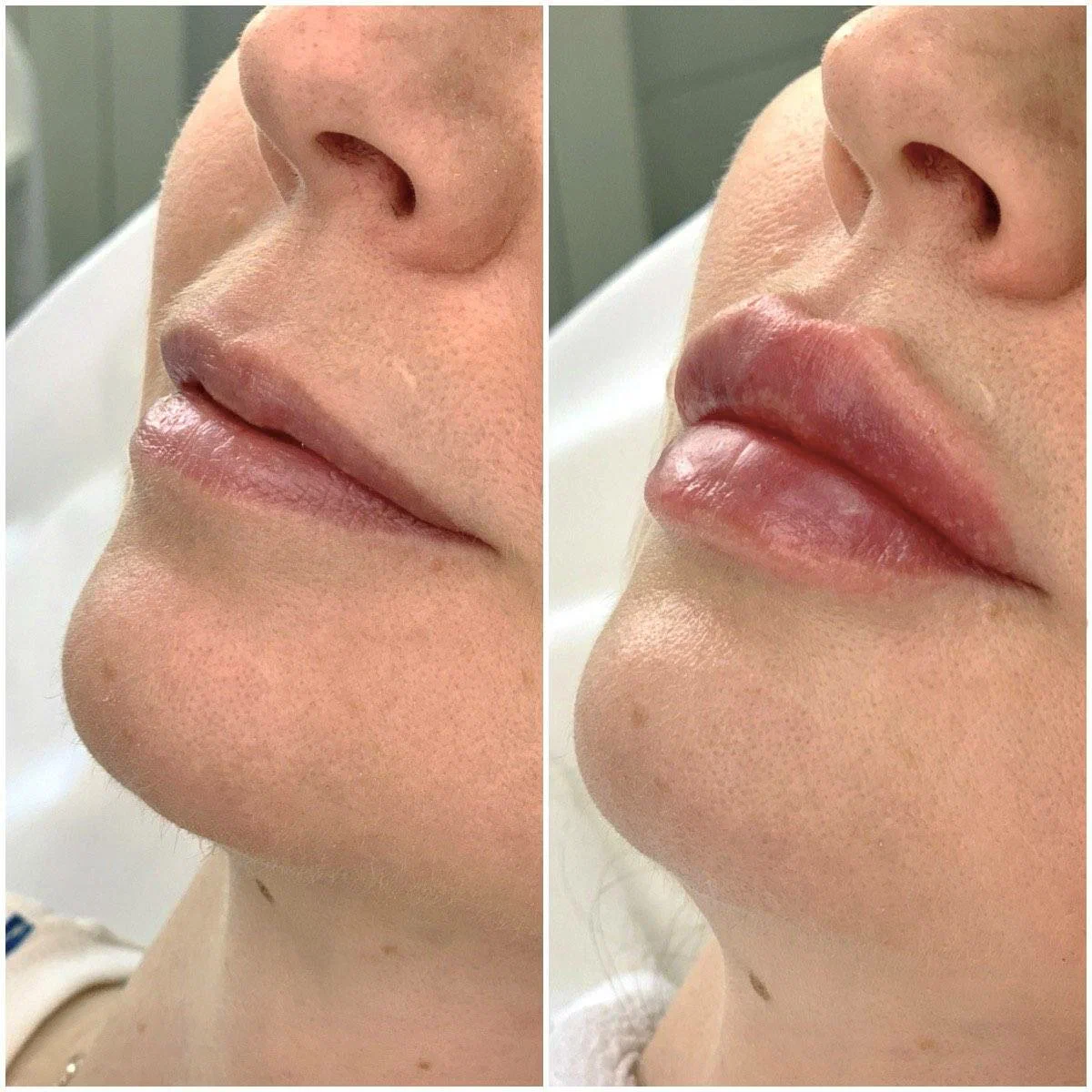
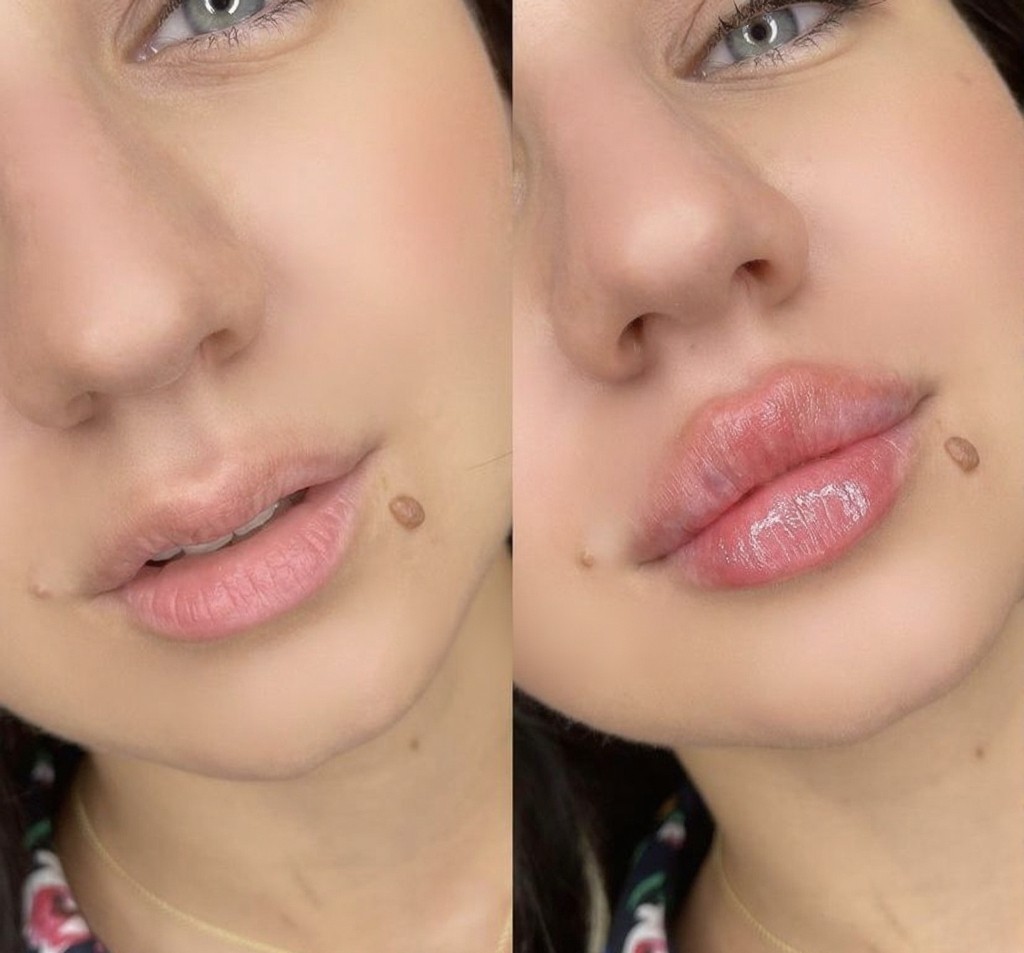
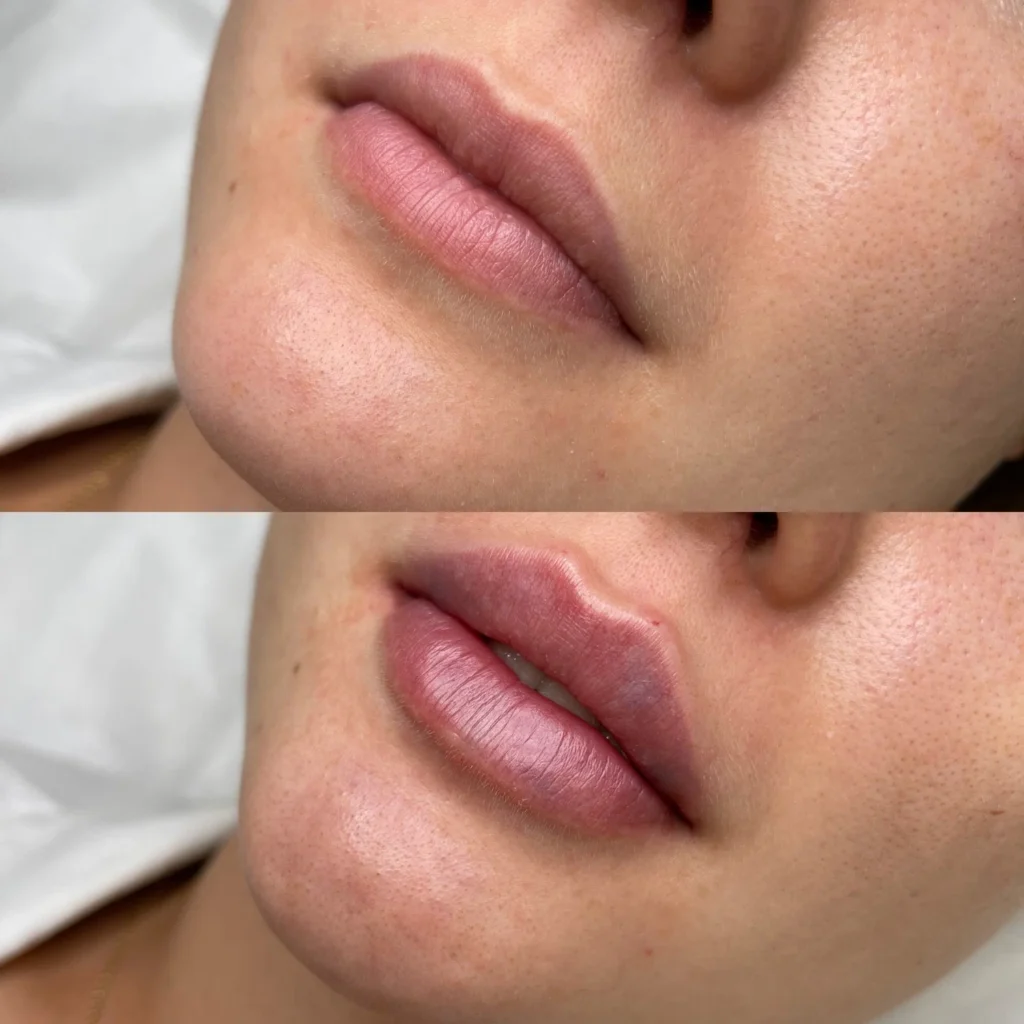
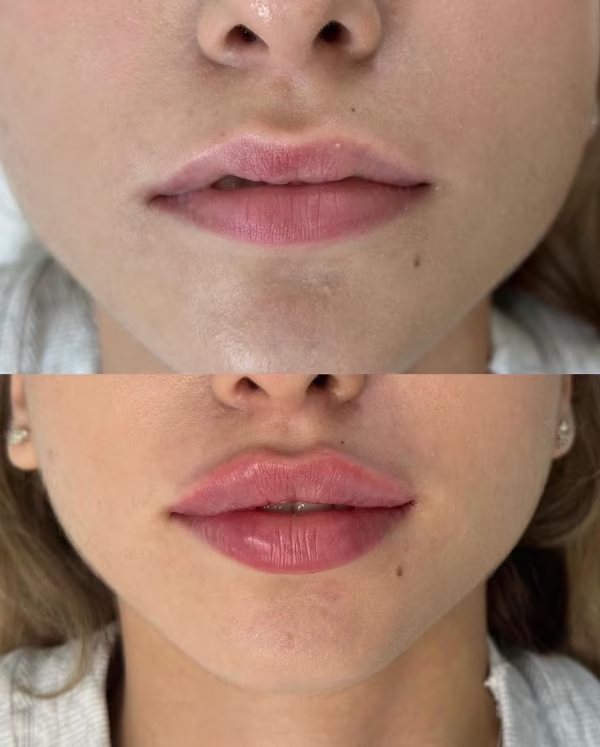
Before treatment, the area may appear flat, undefined, or lacking projection near the centre. After the Russian technique, patients typically notice a cleaner cupid’s bow, improved vertical definition, and a structured pout that retains natural movement. The transformation is shaped by individual anatomy rather than a standardised outcome.
Results develop gradually as swelling and the risk of bruising settle over one to three weeks. As tissues soften, the subtle heart shape associated with the russian doll style becomes more apparent. At this stage, lips appear refined rather than overbuilt, and the overall change supports natural beauty and a balanced natural look.
- Improved vertical lift and better upper projection
- Cleaner cupid's bow with more precise contour definition
- Heart-shaped central fullness without excess width
- Lower association with migration than some traditional methods
What Is a Russian Lip Filler?
Russian lip filler is a specialised injection technique that uses hyaluronic acid gel as a dermal filler to reshape and lift the mouth vertically rather than horizontally. Unlike traditional lip approaches, where product is directed toward the border to add width and forward projection, the russian lip filler technique places small amounts in vertical columns to build height and sharpen the cupid’s bow.
Hyaluronic acid occurs naturally within connective tissue. When used for augmentation, the gel integrates with surrounding structures to add volume while maintaining a soft, pliable feel. The amount used is calibrated carefully to the patient’s anatomy, supporting natural results and helping the mouth remain expressive rather than overfilled.
This approach is particularly well suited to patients who want definition without the rounded, protruding effect that conventional products can sometimes create. Because the technique focuses on lifting and shaping centrally, it enhances the natural outline without overriding it.
The Russian Lip Filler Process: Step by Step
01
Initial Consultation
Shape, facial proportions, aesthetic goals, and relevant medical history are reviewed before any treatment plan is agreed.
02
Clinical Assessment and Planning
The injector assesses anatomy, tissue quality, and the most suitable vector pattern to achieve the desired lift and contour.
03
Pre-Treatment Preparation
A practitioner may apply a numbing cream 20 to 30 minutes before treatment to improve comfort.
04
Treatment Delivery
The gel is placed in precise vertical columns, with movement dragged upward from the base to build height and support definition.
05
Aftercare and Recovery Guidance
Patients are advised not to massage the area, to avoid strenuous activity, and to use cooling measures during the first 24 hours.
- Procedure time: 30–45 minutes
- Recovery: Mild swelling and bruising typically settle within five to seven days
Benefits of Russian Lip Filler
The Russian technique offers a clinically distinct alternative to conventional augmentation for patients who want structural lift rather than uniform volume. By shaping the mouth through vertical placement rather than horizontal distribution, it adds height to the upper area, enhances the cupid’s bow, and produces a sculpted pout that sits naturally within the patient’s features.
Hyaluronic acid gels are chosen for their compatibility with soft tissue, reversibility where clinically necessary, and established use in aesthetic medicine. Because the product is anchored within the structure rather than spread along the outer edge, there may be a lower tendency toward migration than with methods that often place volume more superficially.
This treatment is also valued for outcomes that avoid the appearance often described as duck lips. Because the technique focuses on lifting rather than simple protrusion, it can enhance your lips while preserving movement, expression, and proportion between the upper and lower areas.
- Vertical lift that adds height without obvious widening
- Cleaner contour and more defined cupid's bow
- Lower association with migration than some standard techniques
- Natural-looking improvement that preserves expression
- Adjustable hyaluronic acid-based product where review is needed
Russian Lip Filler Treatment Options
Standard Russian Enhancement
Suitable for patients with naturally thin lips seeking lift and definition without a major volume change. A single syringe of hyaluronic acid gel is placed at carefully selected points from the base upward, refining the cupid’s bow and adding measured height to the upper area.
Enhanced Volume and Contouring
For patients requiring more visible augmentation, a greater amount of product is distributed across multiple points. This approach adds central fullness while further defining the border and refining overall shape in proportion to the surrounding features.
Combined Augmentation with Perioral Support
Where enhancement forms part of a broader facial plan, the Russian technique may be combined with perioral contouring. This improves balance between the upper and lower areas and contributes to more complete facial harmony where the mouth and surrounding structures are treated together.
- First-time augmentation for patients seeking structured, natural results
- Thin anatomy requiring vertical lift and central definition
- Revision work after previous traditional treatment
- Combined plans that include the perioral area
- Top-up or correction sessions where appropriate
Why Choose Us?
Angelika brings more than eight years of international medical experience to every appointment, combining advanced injection methods with strict UK safety standards and a clinical focus on subtle, structurally considered results.
Every plan is developed following detailed assessment of anatomy, facial proportions, and individual goals. Dr. Ivan, a GMC-registered prescriber, provides required face-to-face consultations and issues prescriptions for prescription-only products where clinically appropriate.
The clinical approach is guided by anatomy and personal preference rather than a standardised template. Outcomes are intended to remain proportionate and understated, suited to the individual’s features without dominating them.
Our london clinic provides an environment consistent with the standards expected for aesthetic injectable care across london.
- Qualified aesthetic practitioner with over eight years of international medical experience
- Experienced injector working to UK safety standards
- GMC-registered prescribing support for prescription-only products
- Detailed consultation and personalised planning before every session
- Hyaluronic acid products selected for compatibility and reversibility
- Evidence-based technique focused on natural, proportionate results
Disclaimer: Angelika is an aesthetic practitioner, not a medical doctor. Where prescription-only products are clinically appropriate, face-to-face consultation and prescribing are provided by GMC-registered prescriber Dr. Ivan.
Frequently Asked Questions
How long does russian lip filler last?
Results typically last 6 to 12 months, although some patients maintain the effect beyond that depending on metabolism, product choice, movement, and tissue response. Hyaluronic acid fillers break down gradually, so longevity is never identical from one patient to another. A review or top-up may be recommended to maintain the original contour, especially if preserving central lift and precise lip shape is important. The exact timeframe also depends on the amount of filler used and how strongly the tissue retains volume near the centre.
How is the russian lip technique different from traditional methods?
The russian lip filler technique differs from a traditional lip filler approach because it focuses on vertical lift rather than outward spread. Unlike traditional lip methods, where product is often directed toward the lip border to increase width or projection, this technique builds height more centrally. In simplified terms, filler is injected vertically into selected columns so the shape lifts upward instead of pushing forward. That change in vector is one reason patients choose it when they want a more structured lip enhancement.
Is russian lip filler suitable for everyone?
Not every patient is an ideal candidate. Suitability depends on anatomy, facial proportions, existing tissue, and medical history. Patients with active infection near the mouth, certain autoimmune conditions, or pregnancy and breastfeeding are generally advised against treatment. A detailed assessment is completed before any plan is agreed, and the approach is recommended only where it is clinically appropriate. In practice, lip augmentation should be based on the individual lip shape and treatment goal rather than on trend-led demand alone.
Does the treatment hurt?
Discomfort is usually manageable. Most patients are more comfortable once a topical anaesthetic has been applied before treatment, giving the area time to numb adequately. During filler injection, sensations are commonly described as pressure, pinching, or brief sensitivity rather than significant pain. Residual tenderness generally settles within 24 to 48 hours. As with any cosmetic treatment, comfort depends on anatomy, anxiety level, injector technique, and the number of precise passes required to achieve the desired contour.
What is the downtime after russian lip filler?
There is usually no major downtime, and most patients return to normal activity the same day. Swelling and minor bruising are the most common short-term effects, often peaking in the first 24 to 48 hours before gradually settling. Cooling can help, and patients are advised not to massage the area in early recovery. Because the russian lip filler technique creates lift through multiple precise placements, healing can look different from a traditional lip filler procedure, but final settling still usually occurs over one to three weeks.
Can russian lip filler migrate?
One reason many patients consider this treatment is its lower association with filler migration compared with some standard approaches. Because the product is supported within vertical columns rather than spread close to the outer edge, it may remain more structurally anchored within the tissue. Even so, no dermal filler treatment is risk free. Technique, amount of filler, product selection, and anatomy all influence the final outcome, which is why experienced planning matters when trying to reduce the likelihood of filler migration.
When will I see the final result?
There is an immediate visible change, but the final appearance is partly masked by swelling in the first few days. As recovery progresses, the contour becomes clearer, usually within five to seven days. Tissues continue to settle over the following weeks as hyaluronic acid fillers integrate more fully, and most patients see the final result at around two to three weeks. At that stage, the lip border, central definition, and volume near the middle are easier to assess accurately.
How much product is needed for russian lips?
The amount of filler required varies from patient to patient and depends on natural size, baseline definition, desired lift, and any previous treatment history. In many cases, one to two syringes are sufficient, although the right plan should always be decided after assessment rather than chosen in advance. The aim is to create controlled lip enhancement with the smallest effective amount, preserving balance and a natural look rather than adding unnecessary bulk through excessive filler injection.
Is this technique mainly for a russian doll shape?
Not necessarily. Although many people associate the look with the russian doll aesthetic, the technique does not have to create a dramatic heart shape. In an experienced London clinic, it can be adapted for soft refinement, more central lift, or a cleaner cupid’s bow without forcing the same look on every patient. The best results come from adapting the russian lip filler technique to anatomy and desired expression rather than copying one stylised outcome associated with traditional lip trends.
Why do some patients compare clinics near Harley Street?
Patients often compare providers across London, including clinics around Harley, Harley Street, or a Harley Street skin clinic, because they associate those areas with established aesthetic practice. Even so, location alone does not determine quality. What matters more is the experience of the injector, whether the treatment plan suits the patient, and whether the clinician explains clearly how dermal filler will be used. A free consultation can be especially helpful when comparing providers and discussing suitability.
Is Russian lip filler the same as standard dermal filler treatment?
It still uses dermal filler, usually hyaluronic acid fillers, but the difference lies in placement and intention. A standard dermal filler treatment may prioritise width, projection, or more general fullness, while this approach is designed to build lift and structure. Because filler is injected vertically rather than pushed outward, the result can look more defined through the centre. Patients choosing between this and traditional lip augmentation usually do so based on the lip shape they want to achieve.
Why is a consultation important before treatment?
A consultation matters because the practitioner needs to assess anatomy, tissue quality, prior filler history, and patient expectations before proceeding. This is particularly important when comparing a traditional lip filler approach with the russian lip filler technique, since each method creates a different result. During assessment, the injector can explain whether topical numbing, anaesthetic choice, product selection, and the likely amount of filler are appropriate. A free consultation also helps patients understand risks, recovery, and whether the treatment is right for them.