
Book Appointment Now

Nasolabial Fold Filler Treatments in London
Nasolabial folds — commonly known as smile lines or laugh lines — are the creases that run from the sides of the nose to the corners of the mouth. Due to a combination of midface volume loss, malar fat pad descent, and the cumulative effect of repeated facial expressions, these folds tend to deepen progressively with age, altering the overall balance and perceived vitality of the face.
Hyaluronic acid dermal filler addresses this structural change by restoring lost volume beneath the fold and, where appropriate, supporting the overlying tissue from below. Treatment will be tailored to individual anatomy, fold depth, and whether correction focuses directly on the nasolabial area or extends to include the wider midface to restore a more youthful facial proportion.

Consultation and Pricing
Treatment suitability, the final plan, and the confirmed cost are determined after consultation and clinical assessment. Pricing depends on depth, product volume required, anatomical complexity, and whether nasolabial fold treatment is delivered as a standalone procedure or combined with adjacent areas.
The figures below are provided for general market orientation only, based on publicly advertised prices reviewed on 27 April 2026 across 5 London clinics. These are not our clinic’s prices and may not reflect consultation fees, promotional discounts, specific products used, technique, or the individual treatment planning required for your anatomy.
- Nasolabial fold filler, single area (1ml): approximately £350–£450
- Nasolabial fold filler, both sides combined session: approximately £380–£500
- Nasolabial fold treatment combined with midface or marionette lines correction: approximately £500 and above
- Follow-up or top-up session, where offered: from approximately £150–£250
Before and After Nasolabial Fold Filler Treatment
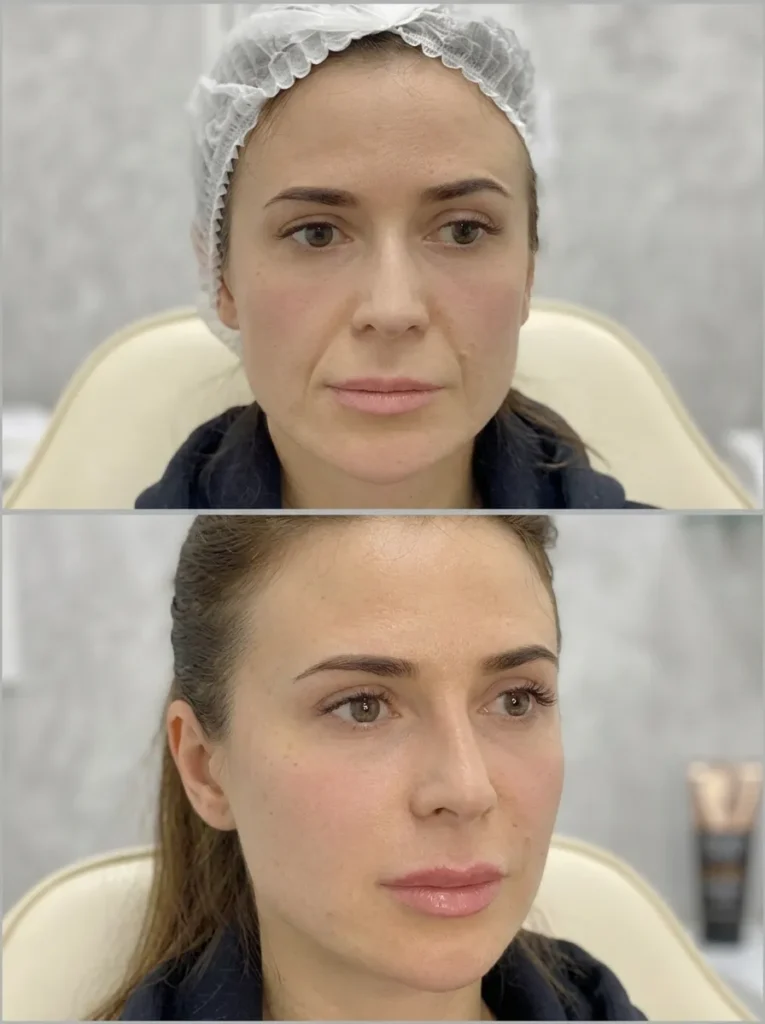
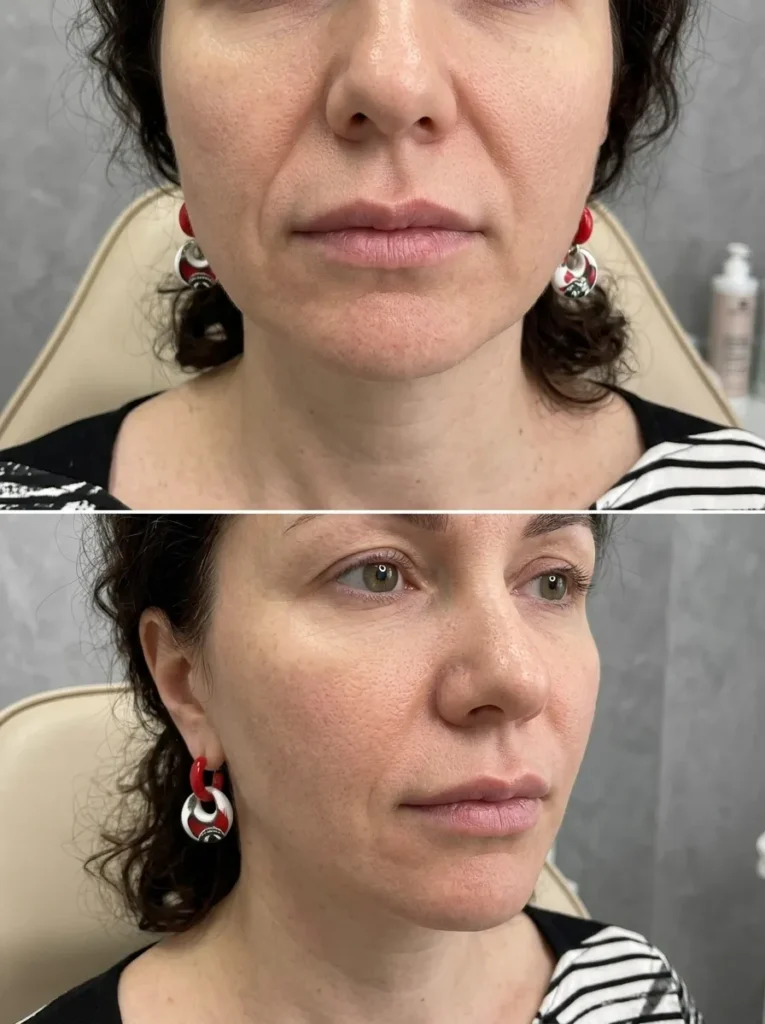
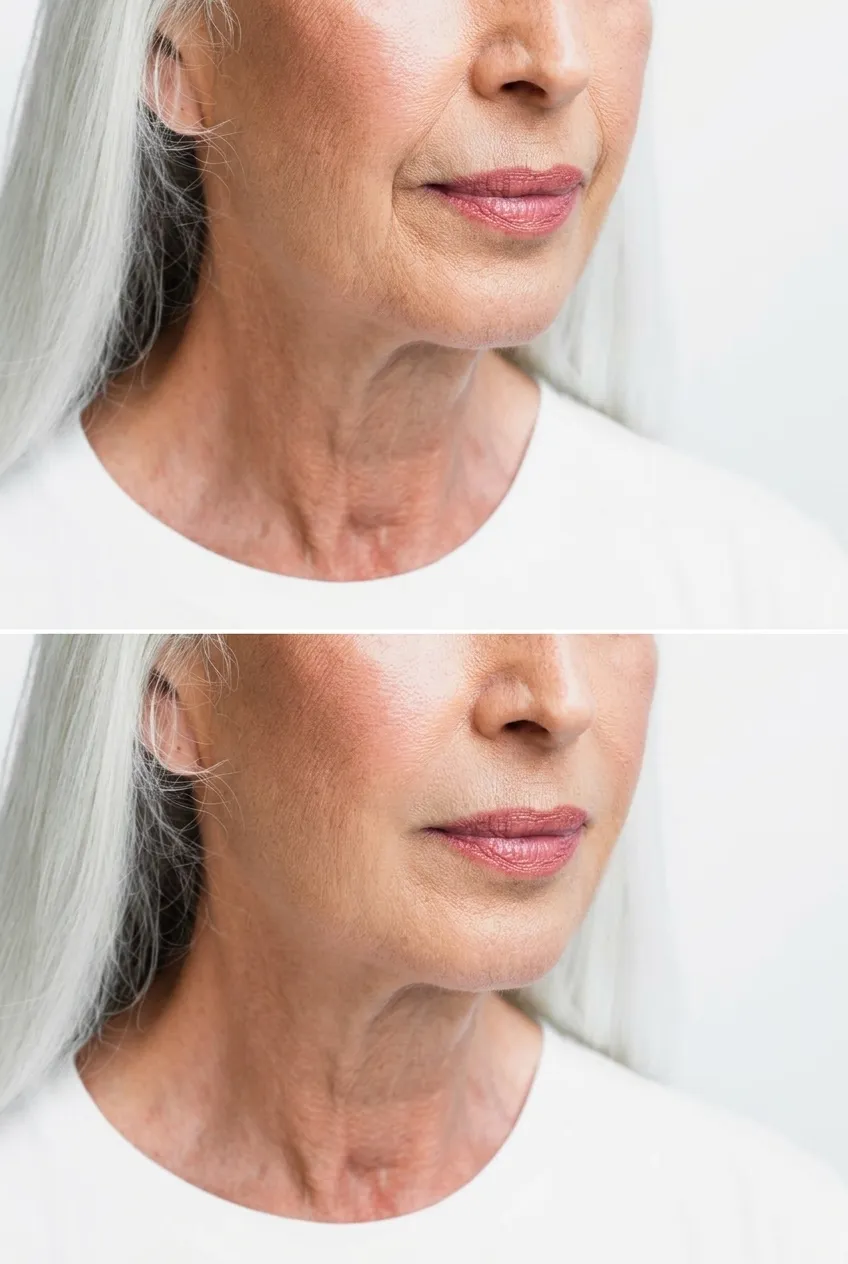
Before treatment, patients typically present with clearly defined creases running from the sides of the nose toward the corners of the mouth, sometimes accompanied by visible tissue descent in the midface. Skin quality, fold depth, and the degree of volume loss vary considerably between individuals and determine both the approach and the volume of filler used.
Following nasolabial filler treatment, the area appears smoother and more supported, with reduced shadow and an improved transition between the cheek and perioral region. Results will be visible almost immediately, though initial swelling settles gradually; the final natural-looking results are generally assessable after one to three weeks, once the hyaluronic acid has fully integrated with the surrounding tissue.
Key treatment outcomes:
- Softened nasolabial folds with reduced depth and shadow
- Improved midface support and a refreshed, more youthful appearance
- Natural-looking results that maintain normal facial expression
- Enhanced facial harmony between the cheek, nose, and perioral region
What is a Nasolabial Fold Filler?
Nasolabial fold filler is an injectable treatment using hyaluronic acid gel to restore volume directly beneath the fold or within the deeper tissue layers of the midface. The fillers we use contain hyaluronic acid, a naturally occurring polysaccharide with strong hydrophilic properties, meaning it attracts and retains water within the tissue matrix to restore both volume and tissue turgor.
Product selection for the treatment depends on the structural requirement. Softer formulations are typically used for superficial fold filling and fine lines, while denser, higher-viscosity gels provide deeper structural lift when midface volume loss contributes to the fold’s prominence. Injecting directly into a deep fold without addressing the underlying volume deficit can produce an unnatural result, which is why clinical planning matters as much as the line filler itself.
As with all hyaluronic acid treatments, the filler is gradually metabolised by the body over time. Dissolution remains available throughout the treatment period, providing a meaningful safety advantage over non-reversible interventions.
Clinically relevant product characteristics include:
- Hydrophilic gel matrix that integrates naturally with surrounding connective tissue
- Variable viscosity options tailored to fold depth and tissue layer
- Lidocaine-containing formulations available to improve procedural comfort
- Reversibility if clinical correction is required at any stage
The Nasolabial Fold Filler Process: Step by Step
01
Initial Consultation
Presenting concerns, treatment goals, relevant medical history, and medication use are reviewed. Suitability for nasolabial fold filler is discussed openly, including realistic expectations and the likely product volume required.
02
Clinical Assessment and Planning
The nasolabial folds are examined in detail, including their depth, tissue laxity, degree of midface descent, and the contribution of malar volume loss. The treating injector will assess whether direct fold treatment, midface support, or a combined approach is most appropriate, and recommend the most appropriate option for your anatomy.
03
Pre-treatment Preparation
The treatment area is cleansed, and a topical anaesthetic is applied to improve comfort. Clinical photographs are taken for baseline records.
04
Treatment Delivery
Hyaluronic acid filler is administered using advanced injection techniques with fine needles or a cannula, with placement guided by the agreed personalised treatment plan and individual anatomy of the nasolabial region.
05
Aftercare and Recovery Guidance
Post-treatment instructions are provided, including guidance on minimising swelling and bruising. A review appointment is offered where clinically indicated.
Procedure time: 30–45 minutes.
Recovery: Mild swelling and tenderness typically resolve within three to five days; final contour settles over one to three weeks.
Benefits of Nasolabial Fold Filler
Nasolabial fold filler offers a non-surgical route to addressing one of the most structurally significant changes associated with facial ageing. For patients with moderate to deep smile lines with nasolabial fold involvement or underlying midface volume loss, targeted hyaluronic acid injections can reduce the appearance of these creases and restore proportion without surgical intervention.
The reversibility of hyaluronic acid treatment is a practical benefit for patients approaching correction for the first time. Results can be refined at a review appointment, and the filler can be dissolved if the outcome requires adjustment. Staged treatment — beginning conservatively — is often preferable to a single high-volume session, as smaller increments are easier to assess and refine. Patients who are really happy with the results often return for a maintenance session as the filler softens naturally over time.
Many patients also report an improvement in overall facial aesthetics following the correction. When the fold is softened and midface structure supported, the face as a whole appears more rested and youthful, with no alteration to natural expression or movement. Unlike Botox, which relaxes muscle activity, dermal fillers work by restoring structural volume to soften the fold directly.
Key benefits at a glance:
- Non-surgical treatment for nasolabial folds with no prolonged downtime
- Reversible hyaluronic acid filler available
- Suitable for mild, moderate, and deep smile lines with nasolabial fold involvement
- Results that develop naturally over one to three weeks without an abrupt change
- Flexible treatment planning, including staged correction for gradual refinement
Nasolabial Fold Filler Treatment Options
Direct Fold Treatment
For patients with mild to moderate nasolabial folds and adequate midface volume, filler is placed directly into the fold to soften it using fine needles or a cannula. A soft-to-medium viscosity hyaluronic acid product reduces the crease, restores subtle volume, and diminishes the shadowing effect without altering adjacent structures. This approach suits patients seeking a conservative refresh rather than a dramatic change.
Midface Volume Restoration
Where deep smile lines with nasolabial involvement are primarily driven by malar fat pad descent and midface volume loss, the treatment focus shifts to deeper structural support. A higher-support formulation is placed in the mid-cheek region to lift the overlying tissue, indirectly reducing the appearance of nasolabial folds while restoring overall facial balance and a more youthful contour.
Combined Nasolabial and Marionette Lines Treatment
Patients with both nasolabial folds and marionette lines may benefit from a combined approach addressing both the mid and lower face in a single session. Treating these areas together improves the overall proportions of the lower face and avoids the visual imbalance that can occur when one area is corrected in isolation. Lines with nasolabial fold filler combined with marionette correction typically produce the most harmonious outcome for patients with broader lower-face concerns.
Available treatment formats include:
- Direct nasolabial fold filler for mild to moderate crease depth
- Midface-focused correction for fold improvement via structural lift
- Combined nasolabial and marionette lines treatment for broader lower-face refinement
- Staged correction over multiple sessions for deeper or more complex folds
- Conservative first-time treatment for patients new to injectable treatments
Why Choose Us?
Angelika brings over eight years of international medical experience to every consultation, with a clinical approach grounded in anatomical assessment rather than standardised volume protocols. All treatments are performed with a clear focus on subtle, structured results that personalise correction to each patient’s individual anatomy.
Our medical team operates from central London, providing the best care through evidence-based treatment planning, transparent communication, and a commitment to patient safety at every stage. Where appropriate, the treatment London patients receive is supported by face-to-face prescribing consultation with GMC-registered prescriber Dr Ivan, in full compliance with UK clinical standards.
Fillers are generally safe when administered by a qualified and experienced practitioner following a thorough clinical assessment. Every consultation is an opportunity to book a consultation, discuss your concerns openly and understand what treatment for nasolabial folds can realistically achieve for your individual facial structure.
What patients can expect from our clinic:
- Anatomically guided nasolabial fold treatment planning, tailored to fold depth and tissue layer
- Hyaluronic acid products from clinically validated brands are selected to match the specific product used for your anatomy
- Eight years of international experience in aesthetic injectables and facial aesthetics
- Face-to-face prescribing consultation with GMC-registered prescriber Dr. Ivan
- Fully insured aesthetic practitioner operating under UK certification
- Aftercare support and clinical review, where clinically indicated

Disclaimer: Angelika is an aesthetic practitioner, not a medical doctor. Where prescription-only products are clinically appropriate, face-to-face consultation and prescribing are provided by GMC-registered prescriber Dr. Ivan. This treatment is available to patients aged 18 and over.
Frequently Asked Questions
How long does nasolabial fold filler last?
Results typically last between nine and eighteen months, though longevity depends on the specific product used, the volume of filler placed, the depth of the fold, and individual metabolic rate. Factors such as sun exposure, skin condition, and treatment depth all influence how quickly the filler integrates and softens over time. Deeper folds commonly known to require higher product volumes may maintain results toward the longer end of this range.
Is nasolabial fold filler treatment painful?
Discomfort is usually mild and manageable throughout the procedure. A topical anaesthetic is applied to the treatment area before injection, and most hyaluronic acid fillers used for nasolabial fold correction contain lidocaine, a local anaesthetic that further reduces sensation during placement. Patients may notice brief pressure or mild stinging as the filler is injected directly into the fold or deeper tissue layers. Post-treatment tenderness is common for a day or two and typically does not require more than standard aftercare measures.
How much filler is needed to soften nasolabial folds?
The correct volume depends on the depth, the degree of midface volume loss, and whether treatment is directed into the fold itself or applied more broadly to the underlying tissue. Many patients require between one and two millilitres distributed across both sides, though shallower folds may respond well to a conservative first treatment using less product. Beginning with a smaller volume and reviewing the result before adding more is often the most clinically sound approach, particularly for patients having nasolabial fold treatment for the first time.
Is there downtime after nasolabial fold filler injections?
Most patients return to normal activity on the same day, as the procedure involves no incisions, stitches, or extended recovery requirements. Mild swelling and occasional bruising at the injection sites are common in the first few days, particularly where multiple passes have been made or deeper tissue layers have been treated. These side effects typically resolve within three to five days. The final contour of the treated area takes longer to assess accurately, as some initial puffiness is expected while the filler settles fully over one to three weeks.
Who is a suitable candidate for nasolabial fold treatment?
Suitable candidates are adults in good general health who have noticeable nasolabial folds they wish to soften, whether due to age-related volume loss, skin laxity, or naturally pronounced anatomy. A clinical assessment is required before treatment, as suitability depends on depth, midface structure, tissue quality, and the patient’s medical history. Those with very deep folds driven by significant structural descent may benefit from a staged approach or a combination treatment plan addressing the wider midface rather than fold filling alone.
Can nasolabial fold filler be reversed?
Yes. Hyaluronic acid filler used in nasolabial fold treatment can be dissolved at any stage, which breaks down the hyaluronic acid and returns the tissue to its pre-treatment state within a short period. This reversibility is one of the principal reasons hyaluronic acid fillers are preferred for this area over non-reversible alternatives. In practice, many patients allow the filler to metabolise naturally over time, but the option to dissolve remains available if a clinical review indicates that correction or adjustment is appropriate.
What are the risks associated with nasolabial fold filler?
All injectable procedures carry inherent risks that should be discussed openly during consultation. Common short-term effects include bruising, swelling, tenderness, and temporary asymmetry as the filler settles. Less common complications include nodule formation or surface irregularity, particularly where product placement is uneven. Rare but serious vascular complications require immediate clinical recognition and management. These risks are reduced by careful anatomical knowledge, appropriate product selection, and advanced injection techniques. Thorough pre-treatment assessment and honest informed consent are the foundation of safe practice.
When will I see the final results of the nasolabial fold filler?
Results will be visible almost immediately after treatment, as the filler adds volume and supports the overlying tissue from the point of injection. However, early post-treatment fullness includes a swelling component, which can initially make the result appear more prominent than the final outcome. The true shape and degree of correction become clearer as this swelling resolves, typically over one to three weeks. Patients are encouraged to wait for this full settling period before requesting any refinement or follow-up treatment.
Does the clinic follow Harley Street standards of care?
Clinical standards at our London clinic are aligned with the same principles of evidence-based practice and patient safety associated with Harley Street and leading aesthetic medicine providers in the UK. All injectable treatments are performed by a fully insured practitioner using clinically validated hyaluronic acid products, and prescription-only injectables are prescribed face-to-face by GMC-registered prescriber Dr Ivan. The medical director’s role in our prescribing model is filled by Dr Ivan, ensuring that every treatment meets the regulatory and clinical standards required under UK law.