
Book Appointment Now

Marionette Line Filler Treatments in London
Marionette lines are the vertical lines that run from the corners of the mouth down towards the chin, deepening progressively with age as collagen production slows and the supporting structures of the lower face lose integrity. Where nasolabial folds affect the mid-face, marionette lines specifically alter the lower third, frequently creating a downturned or fatigued expression even at rest.
Hyaluronic acid dermal filler addresses these folds by restoring lost volume along the mouth-to-chin crease and providing structural lift to the surrounding tissue. At our central London clinic, treatment is planned individually, with filler placement guided by the depth of the lines, facial movement patterns, and the patient’s overall lower face anatomy.
Consultation and Pricing
Treatment suitability, the personalised treatment plan, and final cost are confirmed after consultation and clinical assessment, and depend on anatomy, product volume, treatment complexity, and the number of areas addressed.
The figures below are provided for general London market guidance only, based on publicly advertised prices reviewed on 28 April 2026 across 5 London clinics. These are not our clinic’s prices and may not reflect consultation fees, promotional pricing, volume differences, technique variation, or individual treatment planning.
- Marionette line filler using 1 ml: £350–£500
- Marionette line filler using 2 ml (deeper lines or bilateral correction): £500–£800
- Combined marionette line and nasolabial folds treatment: £500–£850
- Perioral area correction, including marionette and mouth corner support: £600 and above
- Follow-up or top-up session, where offered: from approximately £250
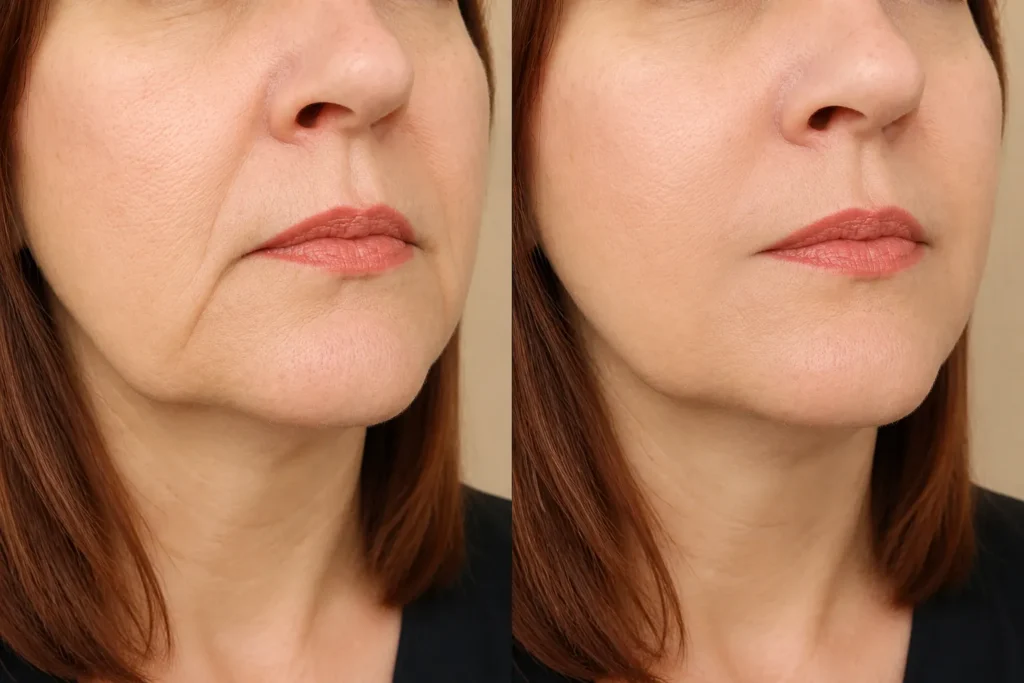
Before and After Marionette Line Filler Treatment
Before treatment, patients typically present with visible vertical lines running from the corners of the mouth towards the chin, often accompanied by a downturned expression or early jowl shadowing. The lower face can appear heavier or more drawn than the patient’s natural resting expression reflects.
Following filler treatment, the mouth-to-chin folds are softened, and the corners of the mouth are gently supported, producing a more balanced, refreshed lower face. Results are visible immediately after treatment and continue to refine as the filler integrates with surrounding tissue over one to three weeks.
Key treatment outcomes:
- Softened vertical lines from the corners of the mouth to the chin
- Improved support for downturned mouth corners
- Restored volume to the lower face with natural-looking results
- Reduced appearance of a sad or tired resting expression
What is a Marionette Line Filler?
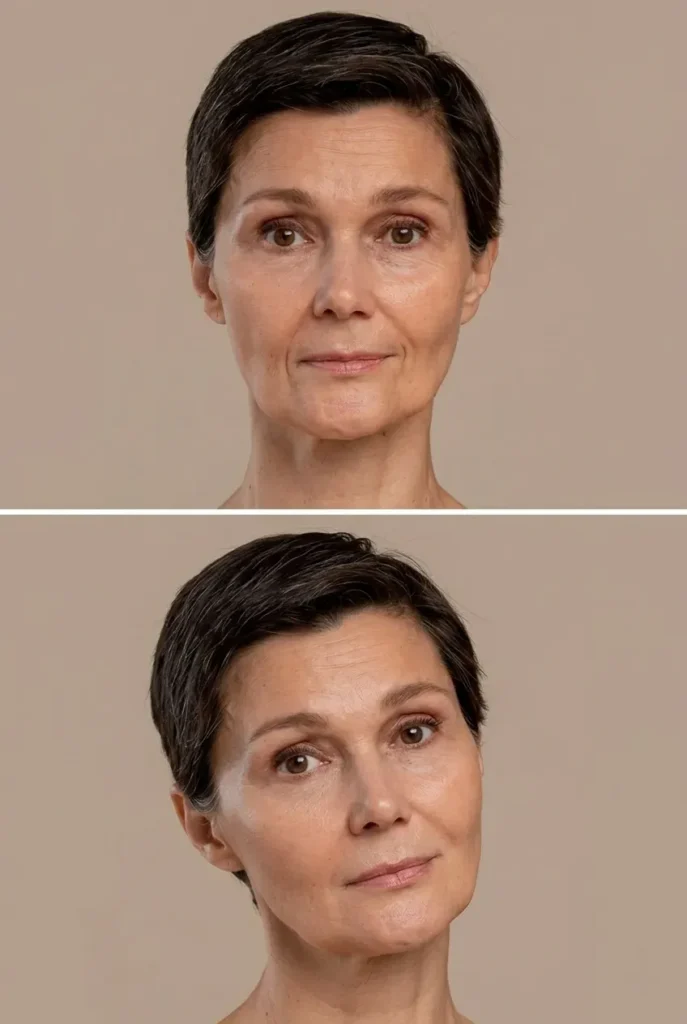
Marionette lines develop where the depressor anguli oris muscle repeatedly pulls the corners of the mouth downward, combined with progressive loss of dermal collagen, subcutaneous fat, and ligamentous support. The resulting fold separates the chin from the cheek and deepens with time, often extending towards the jawline in more advanced cases.
Hyaluronic acid fillers used for this area are selected according to the depth of the lines and the degree of structural support required. Denser, more cohesive formulations provide lift along deeper lines, while softer gels may be appropriate for shallower folds or patients seeking subtle refinement.
Because hyaluronic acid is metabolised naturally over time, the treatment is inherently reversible. This reversibility is a clinically relevant safety feature, particularly when treating an anatomically complex area such as the lower face.
Relevant clinical considerations include:
- Distinction between marionette lines and nasolabial folds when planning treatment
- Filler volume and product grade determined by line depth and tissue condition
- Assessment of whether the corners of the mouth require additional support
- Option to combine with adjacent area correction, where clinically appropriate

The Marionette Line Filler Process: Step by Step
01
Initial Consultation
Treatment goals, relevant medical history, and aesthetic concerns are reviewed. The depth of the lines, facial movement, and overall lower face structure are discussed to establish a realistic treatment plan.
02
Clinical Assessment and Planning
The marionette lines, mouth corners, nasolabial folds, and adjacent lower face structures are assessed in detail to determine appropriate filler placement, volume, and product selection.
03
Pre-treatment Preparation
The treatment area is cleansed, and a topical anaesthetic is applied. Clinical photographs are taken before any product is administered.
04
Treatment Delivery
Hyaluronic acid filler is introduced using a fine needle or cannula, with placement guided by the anatomical assessment and the agreed treatment plan.
05
Aftercare and Recovery Guidance
Post-treatment instructions covering swelling management and activity are provided. A clinical review may be arranged where further assessment is appropriate.
Procedure time: 30–45 minutes.
Recovery: Mild swelling, tenderness, or bruising typically settles within three to five days; final contour becomes assessable after one to three weeks.
Benefits of Marionette Line Filler
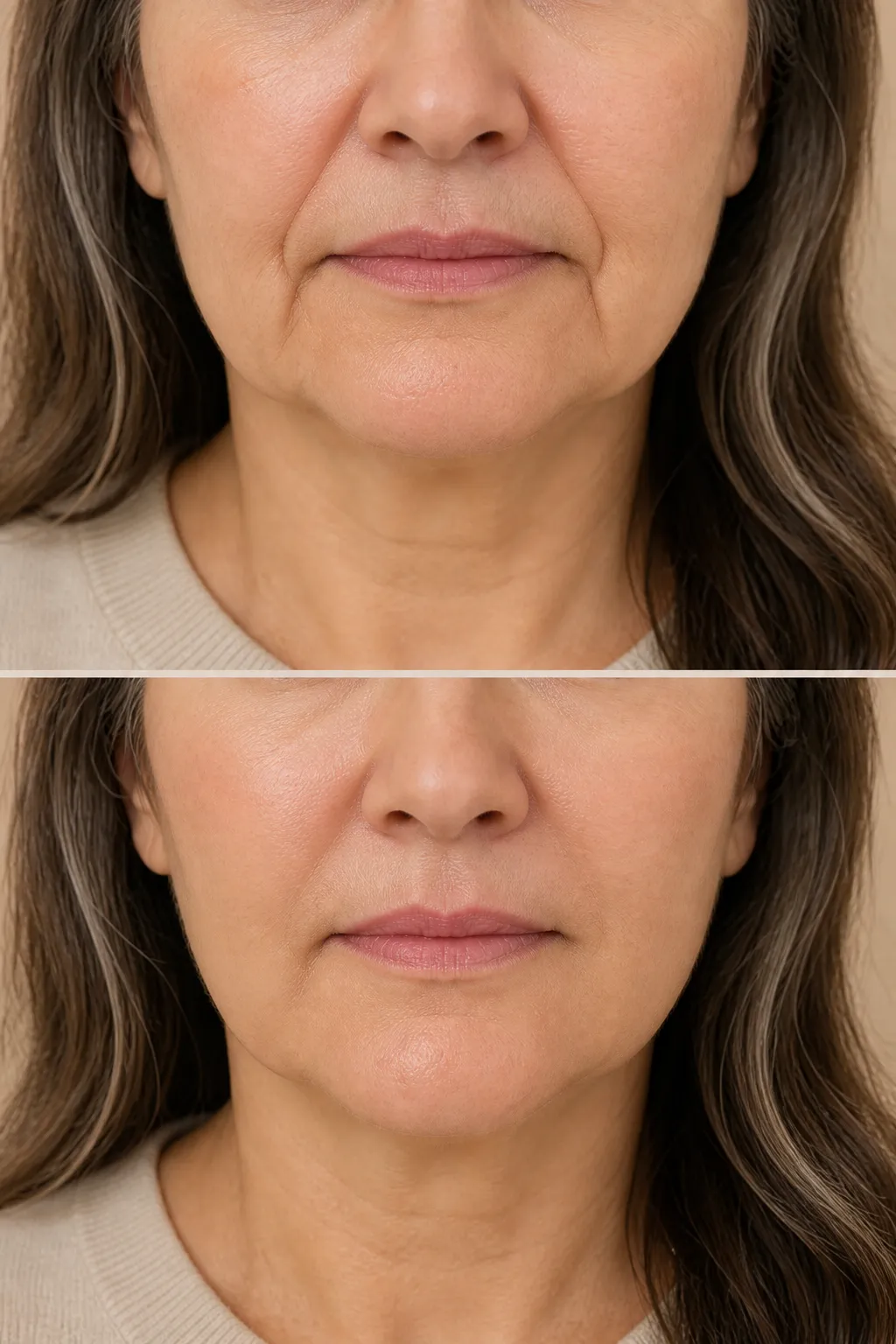
For patients with established vertical lines or a downturned lower face, hyaluronic acid filler offers a non-surgical route to meaningful structural correction. The treatment lifts the corners of the mouth, softens the fold running towards the chin, and reduces the shadowing that accumulates along the jawline as facial volume diminishes with age.
The adaptable nature of hyaluronic acid treatments means that results can be refined over time rather than committed to in a single session. Conservative initial treatment allows the practitioner to assess how the filler integrates with the patient’s facial movement before further volume is added, reducing the risk of an unnatural result.
When placed with anatomical precision, marionette line filler can meaningfully improve the overall balance of the lower face without altering natural expression. Patients frequently report that the treated area looks refreshed rather than obviously altered — an outcome that depends on careful planning and appropriate product selection.
Key benefits at a glance:
- Non-surgical correction with no prolonged downtime
- Targeted filler placement along the mouth-to-chin fold
- Lift to downturned corners of the mouth without affecting natural movement
- Gradual, natural-looking results that develop as the filler integrates
- Dissolution available if clinical correction is required
Marionette Line Filler Treatment Options
Subtle Refinement
For patients with early-stage marionette lines or mild asymmetry at the corners of the mouth, a conservative approach using a lower-volume soft-grade hyaluronic acid gel can soften the fold and provide gentle support without adding significant bulk to the lower face.
Standard Correction
A standard treatment using 1 ml of appropriately graded hyaluronic acid filler addresses established vertical lines from the corners of the mouth to the chin, restoring lost volume and providing measurable lift. This approach suits patients with moderate line depth seeking a noticeably fresher lower face profile.
Combined Lower Face Treatment
Where marionette lines occur alongside nasolabial folds or broader lower face volume loss, a combined treatment plan addressing multiple areas may produce more harmonious results than isolated correction. Treatment is tailored to the individual’s facial structure and the depth of correction required.
Available treatment approaches include:
- Conservative single-area treatment for early or shallow marionette lines
- Standard 1 ml correction for moderate line depth and mouth corner support
- Higher-volume treatment for deeper lines requiring more structural lift
- Combined marionette and nasolabial folds correction for a comprehensive lower face refresh
- Staged treatment plan for patients preferring gradual, incremental improvement
Why Choose Us?
Angelika brings over eight years of international medical experience to the assessment and treatment of lower face concerns, including marionette lines and the broader perioral anatomy. Her approach centres on structural precision and proportion, with results designed to complement rather than exaggerate natural features.
All prescription-only injectable products are prescribed following a face-to-face consultation with GMC-registered prescriber Dr. Ivan, in accordance with UK clinical standards.
Treatment planning prioritises anatomical integrity throughout. Volume is introduced conservatively where appropriate, and patients are reviewed before further correction is considered.
The clinic operates from central London with a clear commitment to patient safety, evidence-based treatment, and transparent consultation-based pricing.
What patients can expect from our clinic:
- Over eight years of international medical experience in aesthetic injectables
- Anatomically guided lower face assessment before any filler placement
- Hyaluronic acid products from clinically validated brands
- Face-to-face prescribing consultation with GMC-registered prescriber Dr. Ivan
- Fully insured aesthetic practitioner operating under UK certification
- Aftercare guidance and clinical review, where clinically indicated

Disclaimer: Angelika is an aesthetic practitioner, not a medical doctor. Where prescription-only products are clinically appropriate, face-to-face consultation and prescribing are provided by GMC-registered prescriber Dr. Ivan. This treatment is available to patients aged 18 and over.
Frequently Asked Questions
How long do marionette line fillers last?
Longevity depends on the product used, the volume injected, the depth of the original lines, and individual metabolism. In most cases, results remain visible for nine to fifteen months, though patients with very active facial movement or faster metabolic rates may notice gradual softening earlier. Conservative treatments that introduce filler incrementally often integrate naturally and maintain a consistent appearance for longer. A clinical review allows the practitioner to assess whether a top-up is appropriate before the filler has fully diminished.
Is marionette line filler treatment painful?
Discomfort is generally mild and well-tolerated. A topical anaesthetic is applied before treatment, and most hyaluronic acid formulations used for this area contain lidocaine, which reduces sensation during injection. The mouth-to-chin region has moderate sensitivity, and patients typically describe a feeling of mild pressure or brief stinging rather than significant pain. The use of a cannula rather than a needle in certain placements can further reduce discomfort and bruising, and the procedure is usually completed within a comfortable timeframe.
How much filler is needed to treat marionette lines?
The volume required depends on the depth of the lines, the degree of mouth corner descent, tissue condition, and whether adjacent areas such as the nasolabial folds are being treated simultaneously. Shallow or early-stage lines may respond adequately to 0.5–1 ml, while deeper folds with associated volume loss along the lower face may require a staged approach using greater volume over time. The treating practitioner will assess the area clinically and recommend the smallest effective volume that achieves a natural-looking result without overfilling.
Is there downtime after the marionette line filler?
Most patients return to normal activity the same day. Swelling and occasional bruising are common in the first two to four days, particularly if the treatment area includes the corners of the mouth or adjacent tissue. These effects are temporary and typically resolve within a week. Avoiding strenuous exercise, excessive heat, and alcohol in the first twenty-four hours supports optimal healing. Final contour is best assessed after one to three weeks, once early swelling has settled, and the filler has integrated with the surrounding tissue.
Who is a suitable candidate for this treatment?
Suitable candidates are adults in good general health who present with visible marionette lines, downturned mouth corners, or lower face volume loss that is affecting facial balance. Suitability is assessed individually, taking into account medical history, current medications, skin condition, and the realistic expectations of the patient. Treatment is not recommended during pregnancy or breastfeeding, or where an active skin infection is present in the area. The consultation is the appropriate point at which suitability is confirmed and a personalised treatment plan is discussed.
Can the marionette line filler be reversed?
Yes. Hyaluronic acid filler can be dissolved using a special enzyme, which breaks down the product efficiently and allows the area to return towards its pre-treatment appearance. This is clinically relevant for the lower face, where filler placement near the corners of the mouth and along the chin requires precision, and where over-correction may affect natural expression. The reversibility of hyaluronic acid treatments is one of the reasons they are preferred for this anatomical area, as it allows clinical correction if required at any point during the product’s lifespan.
When will I see the final results?
There is an immediate visible improvement following treatment, but the final appearance requires time to assess accurately. Initial fullness is partly attributable to swelling, and the filler continues to integrate with surrounding tissue over the following days. In most cases, the true shape and volume of the treated area become apparent within one to three weeks. Patients are advised to wait for this settling period before requesting any adjustments, as early assessment during the inflammatory phase can lead to unnecessary top-up treatment that risks over-correction.
What are the risks associated with marionette line filler?
All injectable treatments carry risk. Common short-term effects include swelling, redness, bruising, and temporary tenderness at the injection sites. Less common complications include localised nodules or uneven distribution, which may be managed at a clinical review. Rare but serious vascular complications, including accidental injection into a blood vessel, require immediate recognition and treatment. Risk is minimised through thorough anatomical assessment, appropriate product selection, and careful injection technique. Patients are encouraged to disclose their full medical history before treatment and to contact the clinic promptly if any unusual symptoms develop after their appointment.