
Book Appointment Now

Jawline Filler Treatments in London
The jawline is among the first areas of the face to reveal visible signs of ageing. As bone density decreases and collagen production slows, soft tissue support along the lower face diminishes, giving rise to sagging jowls, reduced angularity, and a less distinct jaw and chin contour.
Jawline filler treatment offers a non-surgical route to addressing these structural changes without the recovery associated with surgery. Carefully injected dermal filler adds volume and definition along the jawline and jaw and chin area, producing results that integrate naturally with each patient’s existing facial features and proportions.
Consultation and pricing
The final treatment plan and cost are confirmed after consultation and clinical assessment. Pricing depends on jawline anatomy, product volume, the extent of contouring required, and whether treatment is focused on one area or a broader lower-face plan.
The figures below are provided for general market guidance only, based on publicly advertised prices reviewed on 9 April 2026 across 7 London clinics. These are not our clinic’s prices and may not include consultation fees, promotional pricing, technique differences, or individual treatment planning.
- Jawline filler using 1 syringe: about £300
- Jawline filler using 2 syringes: about £550
- More comprehensive lower-face contouring plans: about £800
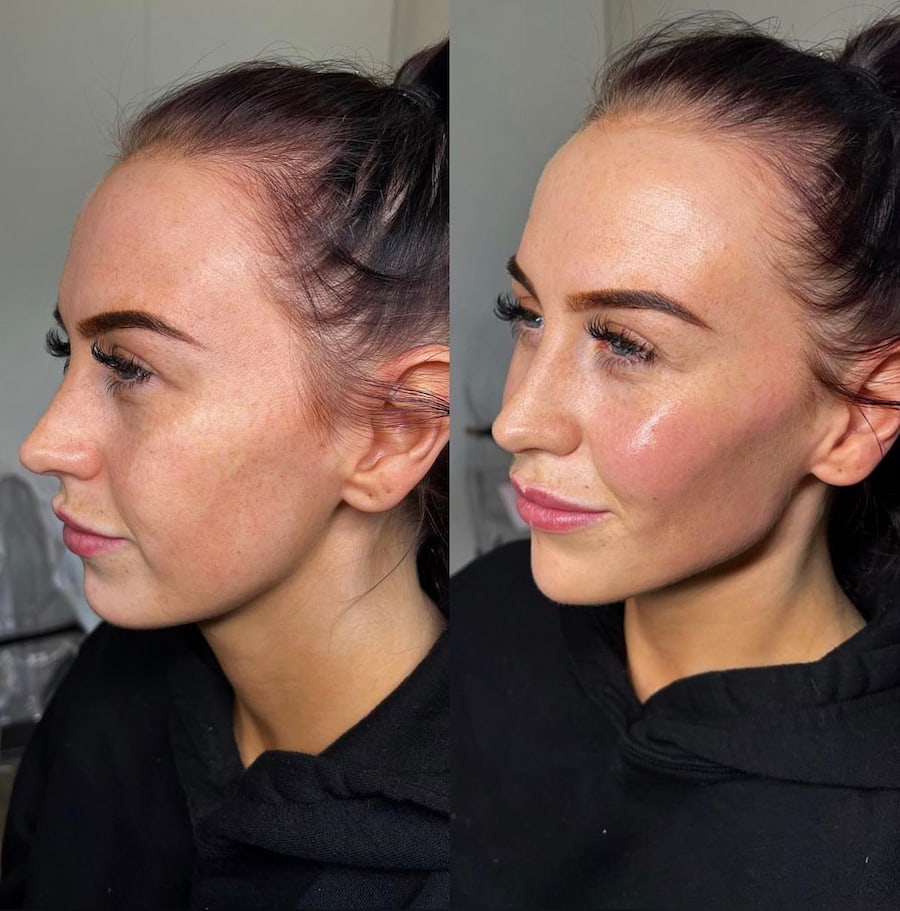
Before and After Jawline Filler Treatment
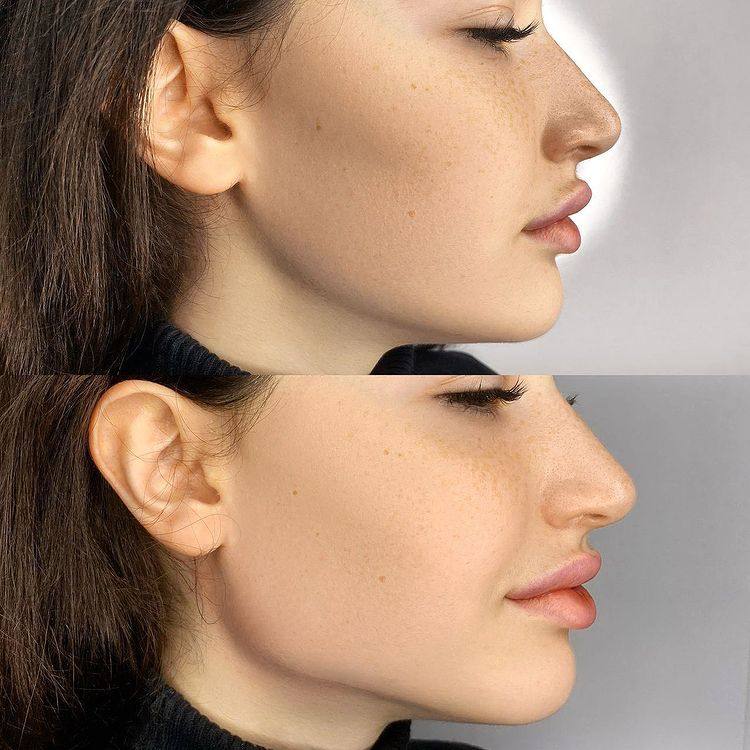
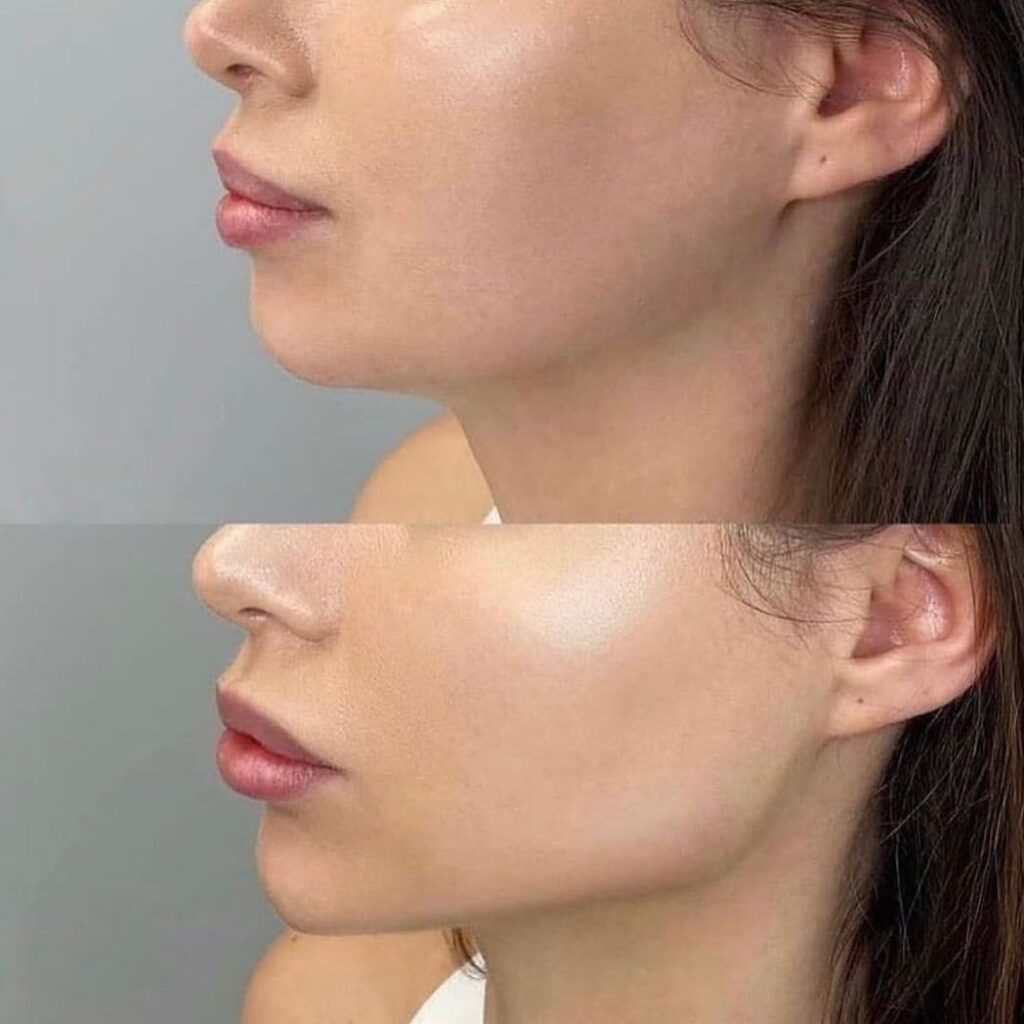
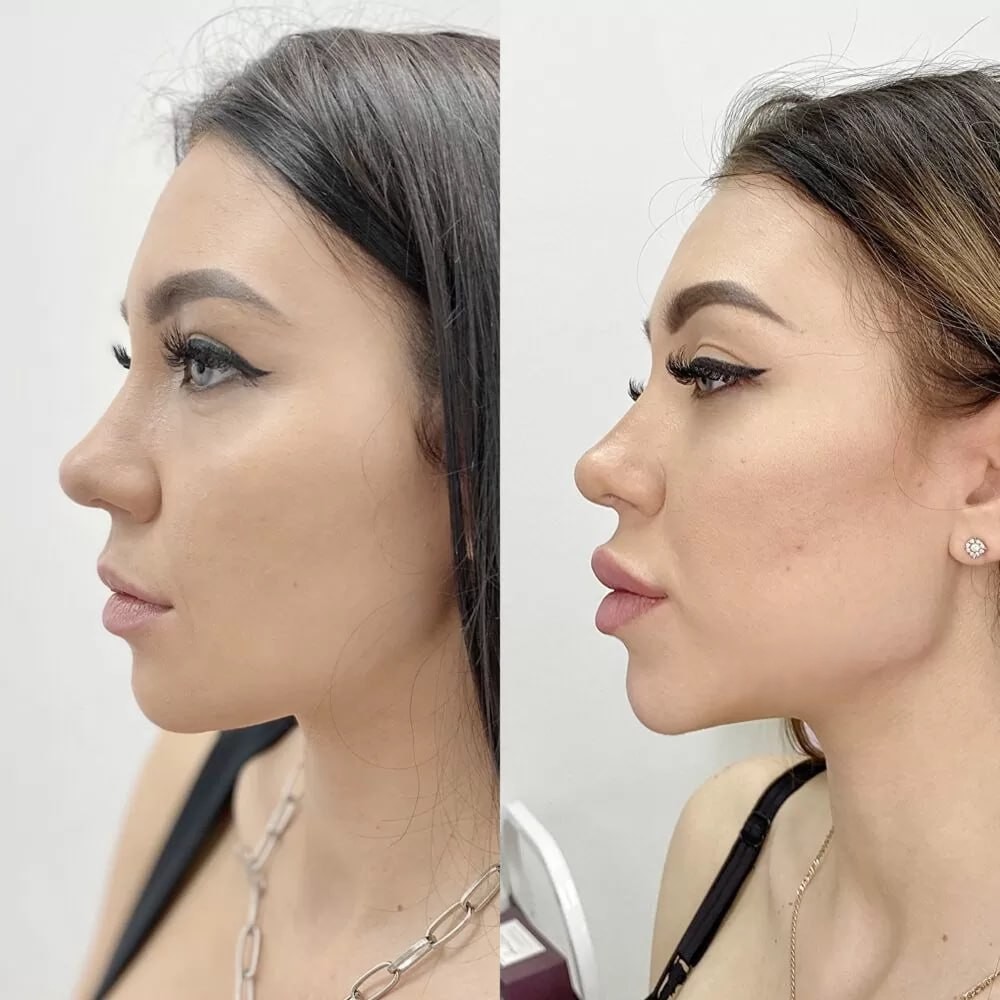
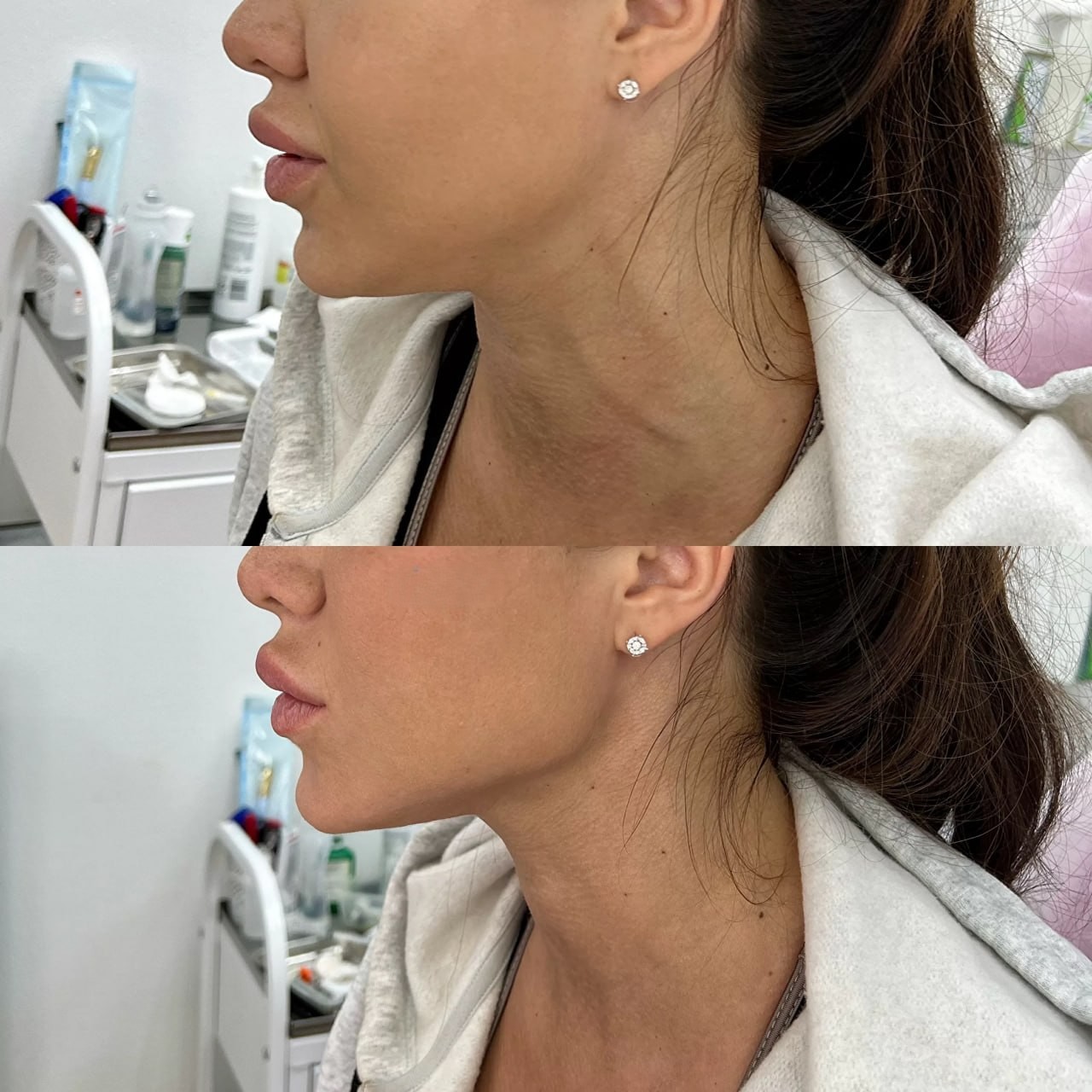
Before treatment, patients commonly present with softened jaw angles, visible jowling, or a loss of distinction between the lower face and neck. These changes often affect the overall balance and youthful appearance of the face, particularly when assessed in profile.
Results following jawline filler treatment develop gradually as the filler settles and integrates with surrounding tissue. Within one to two weeks, improvements in contour and symmetry become clearly apparent, with the full outcome emerging once any initial mild swelling has resolved.
- Improved definition and sharpness along the jawline and chin
- Visible reduction in the appearance of sagging jowls and softened angles
- A more balanced, symmetrical lower face profile when viewed from multiple angles
- Natural-looking results that develop progressively over 10 to 14 days
What is a Jawline Filler?
Jawline filler is a dermal filler treatment in which a hyaluronic acid-based gel is injected along the jawline to restore lost volume and improve structural definition. Hyaluronic acid is a naturally occurring substance found in the skin, where it supports hydration, collagen maintenance, and tissue elasticity.
The filler used for jawline treatments is formulated with a firmer consistency than products used in areas such as the lips or more superficial skin layers. This structural quality allows it to integrate with deeper tissue and provide durable support along the jaw and chin without producing an unnatural appearance.
Fillers also carry a manageable risk profile when administered by a suitably qualified practitioner. The choice between a needle or cannula depends on individual anatomy and the injection sites being targeted. Both techniques carry a risk of bruising, and the appropriate method is selected on a per-patient basis.
The Jawline Filler Process: Step by Step
01
Initial Consultation
Treatment goals, relevant medical history, and overall suitability for jawline filler are assessed. The clinical basis for treatment is established and documented.
02
Clinical Assessment and Planning
The jawline, chin, and lower face are evaluated for bone structure, soft tissue volume, degree of sagging, and proportional symmetry before a personalised treatment plan is developed.
03
Pre-treatment Preparation
Numbing cream will be applied to the area before treatment begins, allowing sufficient time for anaesthetic effect prior to injection.
04
Treatment Delivery
Filler is carefully injected along the jawline using a needle or cannula, with injection sites selected according to the individual clinical and anatomical assessment.
05
Aftercare and Recovery Guidance
Post-treatment guidance is provided covering management of mild swelling or bruising, avoidance of strenuous activity, and appropriate skincare in the days following treatment.
Procedure time: 30–60 minutes
Recovery: Mild swelling or bruising may occur; most patients resume normal activities within 24 to 48 hours.
Benefits of Jawline Filler
One of the principal benefits of jawline filler is its capacity to create a more defined lower face without surgical intervention. By adding volume along the jawline and jaw and chin area, the treatment can reduce the visual impact of sagging jowls and restore a sharper profile that complements existing facial features.
Because jawline filler is minimally invasive, most patients experience only mild swelling or minor bruising following treatment. Numbing cream is applied to the area beforehand, eliminating the need for general anaesthetic. The treatment is performed in a clinical environment, and most patients return to normal activities within 24 to 48 hours.
Hyaluronic acid fillers also hydrate the skin as they integrate with surrounding tissue, offering a secondary benefit beyond structural augmentation. Results can last up to 12 months or longer depending on the filler used and individual metabolism. A personalised treatment plan helps ensure the outcome remains proportionate and appropriate over time.
- Non-surgical jawline definition without incisions or scarring
- Restoration of a more youthful lower face silhouette
- Gradual, natural-looking results with no visible transition period
- Minimal downtime, with most patients returning to normal activities within 48 hours
- Bespoke planning based on individual anatomy, treatment goals, and facial proportions
Jawline Filler Treatment Options
Focused Jawline Definition
This approach targets the jawline as a primary area, injecting filler along the lower border of the jaw to sharpen contour and improve angular definition. It is particularly suited to patients with reasonable chin projection who have experienced volume loss or early jowling along the lateral jaw.
Jaw and Chin Filler
For patients where chin projection or chin asymmetry contributes to an imbalanced lower face, a combined jaw and chin filler treatment addresses both structures simultaneously. This produces a more proportionate result than treating the jawline in isolation and is often more effective in achieving overall lower face balance.
Lower Face Rejuvenation Protocol
A more comprehensive treatment approach addressing the jawline, chin, and adjacent lower face structures where multiple changes have occurred concurrently. This option is tailored to patients presenting with sagging jowls, generalised volume loss, and reduced contour definition across the lower face as a whole.
- Isolated jawline treatment for contour and angular definition
- Jaw and chin filler combined for lower face proportion and balance
- Comprehensive lower face protocol for multiple concurrent ageing concerns
- Personalised treatment planning informed by bone structure, volume, and symmetry
- Single-session or staged treatment approach, determined by clinical assessment
Why Choose Us?
Angelika brings over eight years of international medical experience to every injectable treatment she performs at the clinic.
Her technique combines advanced international methods with strict UK safety standards, delivering subtle and structurally refined results.
Where prescription-only products are required, face-to-face consultation and prescribing are provided by GMC-registered prescriber Dr. Ivan.
All treatments are carried out within a safety-focused clinical environment, with thorough pre-treatment assessment and clear aftercare guidance at every stage.
- Aesthetic practitioner with over eight years of international medical experience
- Advanced injectable technique informed by international training and UK clinical standards
- In-house GMC-registered prescribing support for all prescription-only products
- Thorough pre-treatment consultation with detailed anatomical and clinical assessment
- Clear, personalised aftercare guidance and continued post-treatment support
Disclaimer: Angelika is an aesthetic practitioner, not a medical doctor. Where prescription-only products are clinically appropriate, face-to-face consultation and prescribing are provided by GMC-registered prescriber Dr. Ivan.
Frequently Asked Questions
How long does jawline filler last?
Jawline filler typically lasts between 12 and 18 months, though the length of time varies depending on the filler used, the volume injected along the jawline, and individual metabolism. Firmer hyaluronic acid fillers tend to persist longer than those used in more mobile facial areas. Patients generally return for maintenance treatments to sustain results over time, and an appropriate interval is discussed at consultation based on how the filler settles and integrates.
Is jawline filler safe?
All injectable treatments carry some degree of risk, and jawline filler is no exception. The most commonly reported effects include mild swelling and a risk of bruising at the injection sites, both of which usually resolve within a few days. More serious complications are rare but remain possible. The risk profile is meaningfully reduced when treatment is performed by a qualified practitioner with a thorough understanding of facial anatomy and appropriate injection technique for the lower face.
How much filler is typically needed for the jawline?
The volume of dermal filler required along the jawline varies considerably between patients. Those with mild volume loss and a well-defined underlying bone structure may achieve satisfactory definition with a single syringe, while patients with more pronounced sagging or reduced jaw angle sharpness may benefit from two or more. The appropriate volume is determined during clinical assessment, taking into account facial structure, treatment goals, and the extent of existing tissue changes.
Does jawline filler hurt?
Most patients find jawline filler treatment well tolerated. Numbing cream will be applied to the area before the procedure begins, substantially reducing discomfort at the injection sites. The sensation is typically described as mild pressure or a brief sting rather than significant pain. Some individuals experience greater sensitivity near bony prominences along the jawline. The treating practitioner monitors comfort throughout and adjusts technique where needed to maintain patient wellbeing during the procedure.
Is there any downtime after jawline filler?
Jawline filler is a minimally invasive treatment that does not require surgical recovery. The most common post-treatment effects are mild swelling and a risk of bruising at the injection sites, both of which typically resolve within a few days. Patients are generally advised to avoid strenuous physical activity for 24 to 48 hours and to refrain from applying direct pressure to the treated area. Most individuals return to their normal daily routine shortly after treatment.
Who is a suitable candidate for jawline filler?
Suitable candidates for jawline filler treatment are generally adults who have noticed a loss of definition along the lower face, the development of sagging jowls, or a reduction in jaw angle sharpness. Patients in good general health without contraindications to injectable treatments tend to be the most appropriate candidates. Suitability is always determined at consultation, where facial anatomy, medical history, skin condition, and treatment goals are reviewed before any treatment plan is agreed.
When will I see the final result from jawline filler?
Dermal filler begins to take effect shortly after injection, though the initial appearance may be affected by mild swelling at the treatment sites. As swelling subsides over the first few days, the jawline gradually settles into a more refined contour. The final result typically becomes visible within one to two weeks, once the hyaluronic acid gel has integrated fully with surrounding tissue and any residual swelling has resolved completely.
Can jawline filler be reversed?
Hyaluronic acid-based jawline filler can be dissolved using an enzyme called hyaluronidase if the result is unsatisfactory or if a complication requires management. This represents a meaningful safety advantage over permanent or semi-permanent injectable alternatives. Reversal is carried out at the clinic and typically takes effect within 24 to 48 hours of the procedure. The decision to dissolve filler is always made collaboratively, following clinical assessment by the treating practitioner.