
Book Appointment Now

Tear Trough Filler Treatments in London
The tear trough is an anatomical groove beneath each lower eyelid that deepens with age, creating persistent shadowing and hollowness. Volume loss in this region contributes directly to the appearance of dark circles, often making patients look fatigued despite adequate rest. This tear trough filler treatment addresses the structural problem at its source.
At our London clinic, hyaluronic acid-based dermal filler is placed precisely into the under-eye area to restore filler volume, support the delicate underlying tissue, and reduce dark circles caused by hollowness. The filler choice is made conservatively. The clinical aim throughout is proportionate, natural improvement rather than a noticeably altered appearance.
Consultation and pricing
The final treatment plan and cost are confirmed after consultation and clinical assessment. Pricing depends on under-eye anatomy, product volume, the extent of hollowing, and whether related mid-face support is also needed.
The figures below are provided for general market guidance only, based on publicly advertised prices reviewed on 10 April 2026 across 4 London clinics. These are not our clinic’s prices and may not include consultation fees, promotional pricing, technique differences, or individual treatment planning.
- Tear trough filler treatment: about £350 to £650
- Tear trough treatment combined with cheek or mid-face support: about £550 and above
- Separate top-up or refinement appointments, where offered, may start at about £150
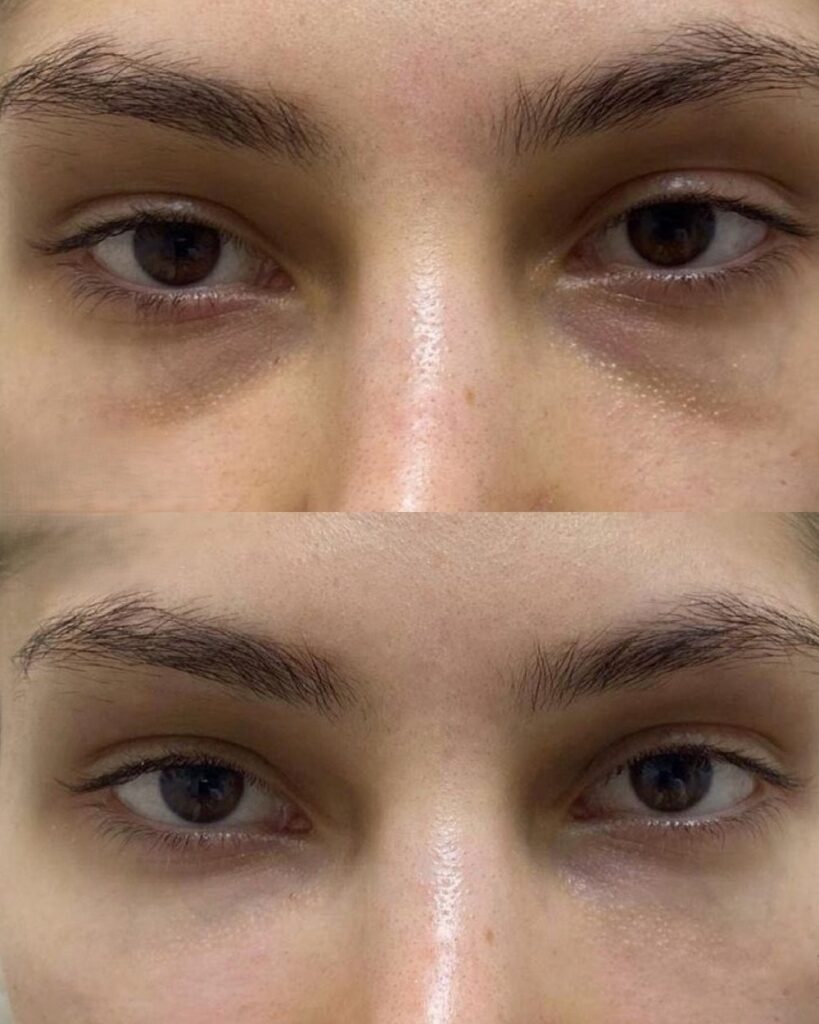
Before and After Tear Trough Filler Treatment
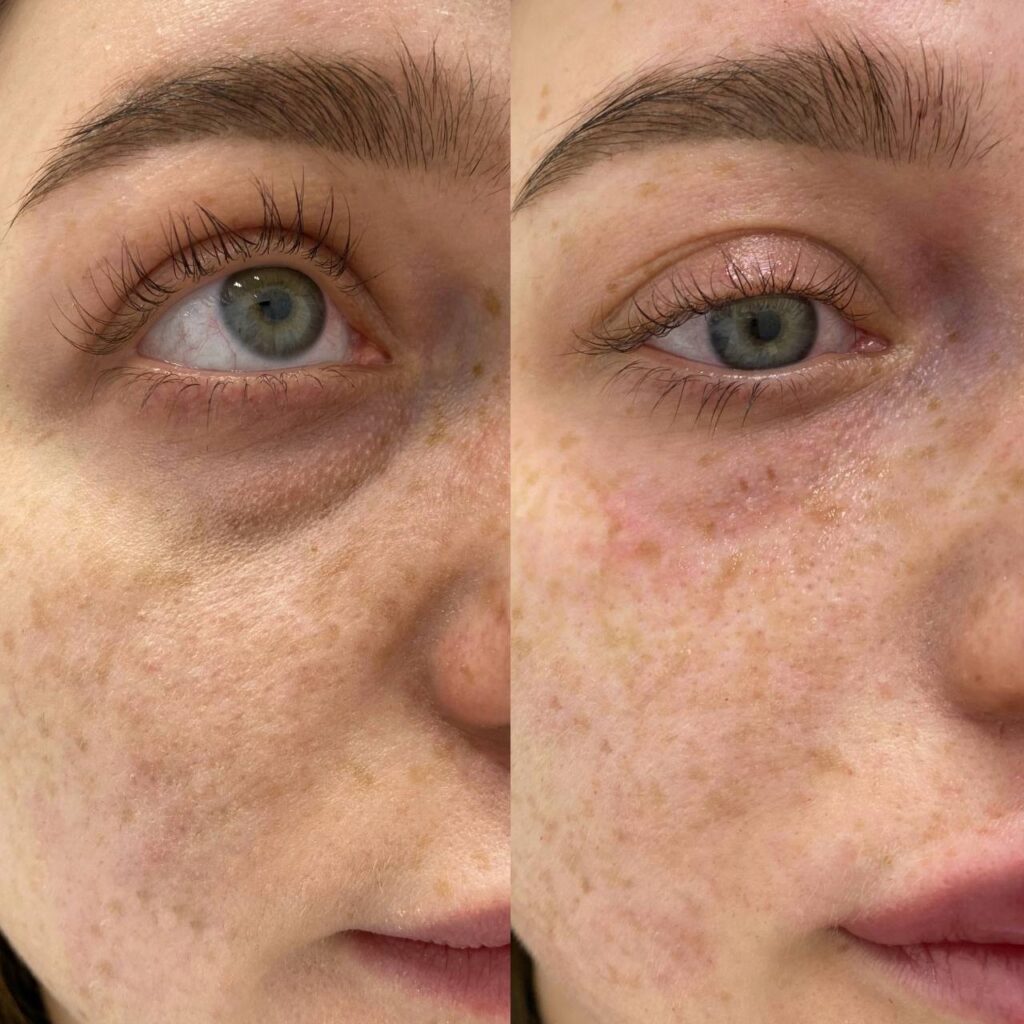
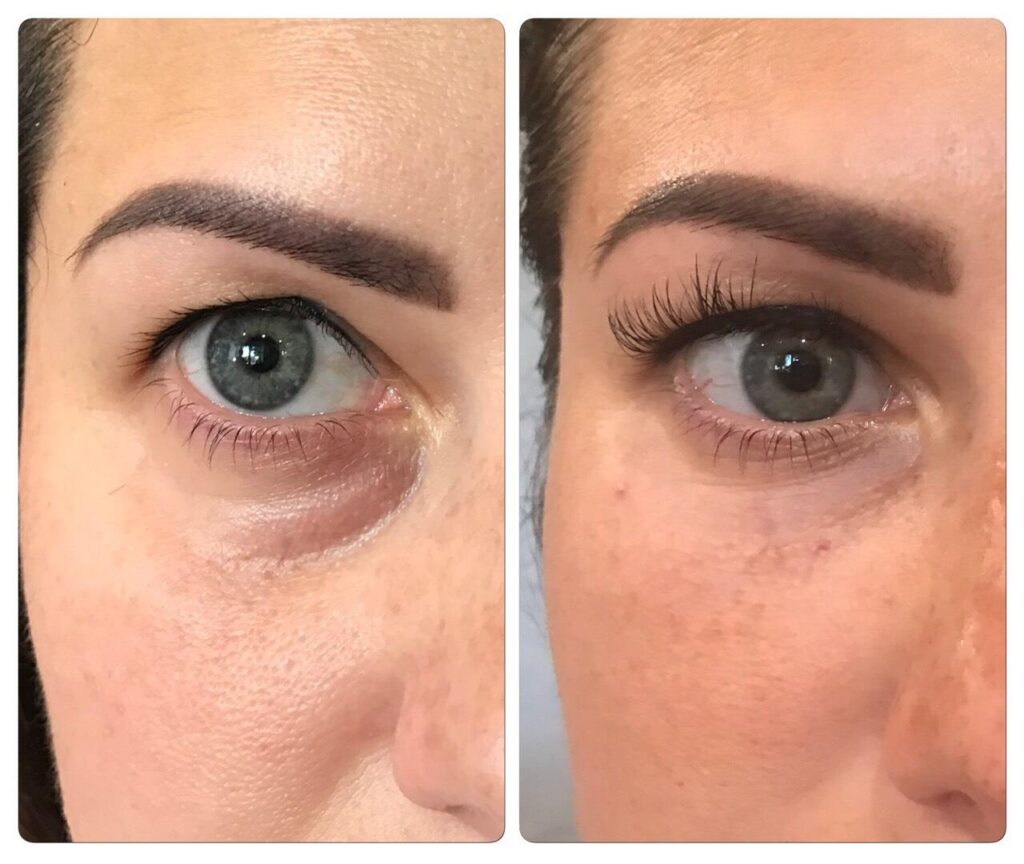
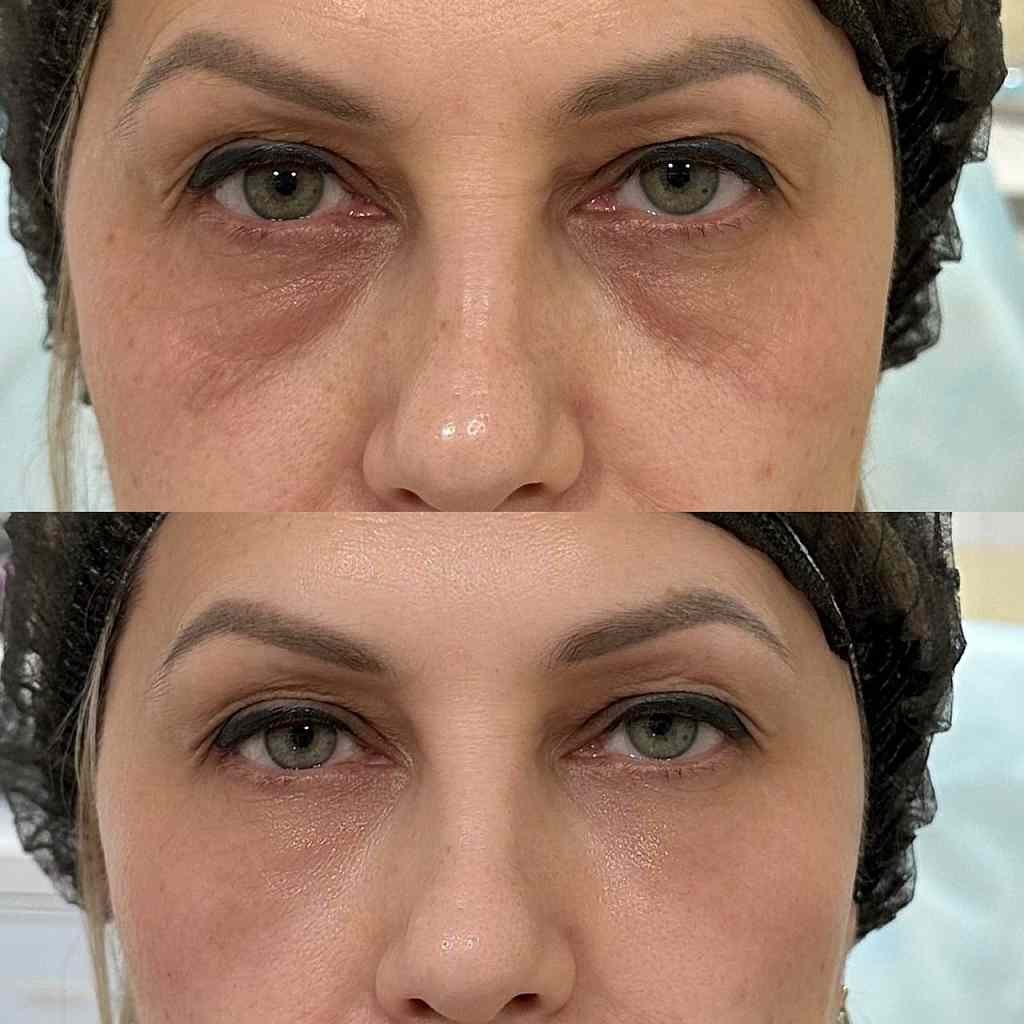
Before treatment, patients typically present with visible under-eye hollowing and shadowing that skincare alone has not resolved. Immediately after the procedure, mild swelling and bruising are expected. Final results emerge gradually over one to three weeks as the filler integrates into the surrounding tissue.
Once settled, the treatment area shows improved contour, reduced shadow depth, and a more rested overall appearance. The transition between the lower eyelid and cheek becomes smoother, with the under-eye area appearing gently supported rather than noticeably filled, contributing to a more youthful appearance.
Treatment benefits include:
- Reduced appearance of dark circles and under-eye hollows
- Restored filler volume in the under-eye area
- Smoother lower eyelid to cheek transition
- Non-surgical rejuvenation with minimal downtime
What is a Tear Trough Filler?
Tear trough filler is a targeted injectable treatment in which hyaluronic acid-based dermal filler is placed into the groove beneath the lower eyelid, known as the tear trough. The product provides structural support, restoring volume where fat pad descent and skin thinning have created visible hollowing.
Hyaluronic acid is a molecule that occurs naturally in connective tissue and retains moisture effectively. When used as filler in this delicate under-eye area, it integrates gradually into the soft tissue, helping add volume subtly and softening the shadow produced by trough deformity.
This under-eye area is among the most technically demanding regions for injectable correction. Proximity to blood vessels, thin overlying skin, and constant movement require careful clinical judgement, precise technique, and considered product selection to achieve safe, proportionate outcomes.
The Tear Trough Filler Process: Step by Step
01
Initial Consultation
Concerns, treatment goals, and relevant medical history are reviewed to determine whether tear trough filler treatment is clinically appropriate and whether the treatment is right for the patient.
02
Clinical Assessment and Planning
The tear trough area, lower eyelid anatomy, and cheek support are assessed to guide filler type, filler volume, and placement depth.
03
Pre-treatment Preparation
The skin is cleansed and a topical anaesthetic is applied. Clinical photographs are taken before any filler injection begins.
04
Treatment Delivery
Filler is injected into the under-eye groove using a cannula or fine needle, guided by tissue response and anatomical landmarks throughout.
05
Aftercare and Recovery Guidance
Post-procedure instructions address swelling management, bruising, activity restrictions, and signs that warrant clinical review.
Procedure time: 30–45 minutes
Recovery: Mild swelling and bruising typically resolve within seven to ten days.
Benefits of Tear Trough Filler
Tear trough treatment offers a non-surgical approach to a structural problem that is difficult to address through surface-level skincare. By restoring volume directly in the under-eye area, the filler procedure can reduce dark circles at their anatomical source rather than masking them. When placed correctly, the improvement appears natural.
The reversibility of hyaluronic acid filler adds an important safety dimension to this treatment. If migration, asymmetry, or an unsatisfactory outcome occurs, hyaluronidase can dissolve the filler. This option is reassuring for patients considering an effective treatment for the delicate under-eye area for the first time.
In cases where midface volume loss is contributing to the depth of the tear trough deformity, combining under-eye treatment with cheek treatment may produce a more structurally balanced result. Supporting the cheek reduces downward mechanical tension on the lower eyelid, improving the area as part of a coherent treatment designed around the patient’s anatomy.
Key benefits:
- Non-surgical treatment for under-eye hollows and dark circles
- Hyaluronic acid filler is reversible if clinically required
- Addresses structural volume loss rather than surface pigmentation
- Can be combined with cheek treatment for broader facial rejuvenation
- Minimal recovery compared with surgical alternatives
Tear Trough Filler Treatment Options
Isolated Tear Trough Treatment
For patients with localised hollowing in the under-eye area and good cheek support, a focused filler injection using a small volume of hyaluronic acid-based filler product addresses the hollow directly. This option suits mild to moderate presentations where broader midface support is not required.
Combined Tear Trough and Cheek Treatment
Where reduced cheek volume is contributing to under-eye depth, treating both areas in one session produces a more balanced result. Cheek support is restored first; the tear trough is then reassessed and treated with a reduced volume as clinically indicated.
Staged Treatment Programme
For patients with more advanced volume loss, significant skin laxity, or complex trough deformity, a staged programme across multiple sessions allows for incremental correction. Each stage is reviewed before proceeding, enabling gradual improvement with careful monitoring of filler integration, filler position, and symmetry throughout.
Treatment pathway options include:
- Isolated under-eye treatment for focused correction
- Combined tear trough and cheek treatment for midface structural support
- Staged multi-session programme for complex or advanced presentations
- Follow-up review and refinement sessions where clinically appropriate
Why Choose Us?
Our approach to under-eye treatment prioritises clinical rigour and careful patient assessment, given the technical demands of this area.
Angelika holds an overseas medical degree and over eight years of international medical experience, practising under full UK certification and insurance for injectable treatments.
Where prescription-only products are required, GMC-registered prescriber Dr. Ivan provides the necessary face-to-face consultation with Dr. Ivan and issues filler prescriptions after clinical review.
Patient suitability is determined individually, with anatomy, skin condition, medical history, and treatment goals all considered before any procedure begins.
Reasons to choose this clinic:
- Thorough consultation prior to every treatment
- Aesthetic practitioner with advanced international filler training and full UK certification
- GMC-registered prescriber on-site for prescription-only products
- Technically precise approach to the delicate under-eye area
- Hyaluronidase available for reversal where clinically indicated
- Honest, anatomy-led assessment of treatment suitability
- Convenient London clinic location for ongoing review and aftercare
Disclaimer: Angelika is an aesthetic practitioner, not a medical doctor. Where prescription-only products are clinically appropriate, face-to-face consultation and prescribing are provided by GMC-registered prescriber Dr. Ivan.
Frequently Asked Questions
How long do the results of tear trough filler last?
Tear trough filler treatment typically maintains its effect for between nine and twelve months, though this varies considerably between patients. The rate at which hyaluronic acid is metabolised differs based on individual physiology, facial movement, and the specific product used. Skin quality and lifestyle factors also influence how long the result remains effective in the under-eye area. A follow-up assessment is generally recommended around the twelve-month mark to determine whether a top-up injection is appropriate.
Is tear trough filler suitable for everyone?
Not all patients presenting with under-eye concerns are appropriate candidates for this treatment. Those with prominent under-eye bags caused by fat herniation rather than volume loss, significant skin laxity, or certain underlying medical conditions may not be suitable. During consultation, anatomy and medical history are carefully reviewed, and if tear trough dermal filler is not the best treatment for the patient’s presentation, alternative options are discussed openly.
How much product is typically needed for the tear trough area?
The volume of hyaluronic acid filler required in the tear trough area is generally small—often between 0.5 and 1.0 ml per side—though this depends on the extent of hollowing, tissue quality, and whether cheek support is also being used for midface support. Using excessive filler volume in this delicate region increases the risk of swelling, migration, and an unnatural result, which is why a conservative and anatomy-led approach is central to safe planning.
Does tear trough filler hurt?
Discomfort during tear trough filler injections is generally mild. A topical anaesthetic is applied before the procedure, and most hyaluronic acid-based dermal filler products also contain lidocaine, which provides additional comfort during the injection itself. Patients typically describe a sensation of pressure or occasional mild stinging around the eye area rather than acute pain. The procedure is brief, and most patients find the experience manageable with the preparation provided beforehand.
What should I expect during recovery after tear trough filler?
Swelling and bruising in the under-eye area are common immediately after the procedure and may take up to ten days to resolve fully. This region is particularly susceptible to bruising due to the density of small blood vessels around the eye area. Patients are advised to avoid alcohol, strenuous physical activity, and direct sun exposure for at least 48 hours. Most people resume their usual routine within a few days, with residual swelling settling gradually over the following week.
Can tear trough filler migrate?
Migration is a recognised risk in the tear trough area, particularly when incorrect placement depth or an inappropriate product type is used. The under-eye region requires a low-viscosity hyaluronic acid-based product placed at a precise anatomical level; using the wrong product or technique increases the likelihood of migration and an unnatural appearance. Should migration occur, hyaluronidase can dissolve the filler. Careful assessment and technically precise placement remain the most effective means of minimising this risk.
When will I see the final results of tear trough filler?
Some visible improvement is typically apparent immediately after the injection, though post-treatment swelling may temporarily distort the appearance of the under-eye area. The final filler results become clear once all swelling has resolved, usually within one to three weeks. During this period, the hyaluronic acid filler integrates progressively with the surrounding soft tissue, and the outcome typically appears softer and more natural as healing completes.
Is tear trough filler worth considering compared with other treatments?
For patients whose under-eye hollowing is caused by volume loss in this region, tear trough filler treatment is one of the most clinically effective non-surgical options available. It addresses the structural deficit directly rather than treating surface pigmentation alone. Results can be significant when the correct filler type and technique are used by a qualified practitioner. However, for presentations involving fat prolapse, pronounced skin laxity, or other anatomical factors, a different treatment plan may be more appropriate.
Can this treatment reduce dark circles and improve under-eye bags?
Yes, where shadowing is primarily caused by hollowing rather than pigmentation alone, carefully placed tear trough filler can reduce dark circles and soften the transition into the cheek. It may also improve the appearance of under-eye bags in cases where loss of support makes them look more obvious, although it does not remove true fat prolapse. During assessment, the practitioner will explain whether addressing tear-related hollowing is likely to help and whether this treatment is right for the anatomy present.
How do I know whether to book a consultation?
The best way to find out is to book a consultation at our London clinic, especially if you are comparing providers near Harley Street Skin clinics or wondering whether this is the right option for your under-eye concerns. Consultation with Dr. Ivan is arranged where prescription-only products are needed, and the assessment will determine whether tear trough fillers help in your case, whether cheek support is also required, what filler approach is safest, and whether a more suitable alternative should be recommended instead.