
Book Appointment Now

Chin Filler Treatments in London
The chin anchors the lower third of the face, and a weak or recessed chin profile can disrupt natural proportions. Chin filler treatment uses precisely injected hyaluronic acid to restore structural balance, addressing the relationship between the lower face, lips, and jawline without surgical intervention.
With age, soft tissue in the chin area and lower facial soft tissue diminish, altering contour and making laxity beneath the jaw more visible. Non-surgical augmentation using dermal filler offers a clinically considered approach to improving projection and definition, helping to restore harmony across the lower face in a graduated, controlled manner.
Consultation and pricing
The final treatment plan and cost are confirmed after consultation and clinical assessment. Pricing depends on chin projection, facial proportions, product volume, and whether treatment is focused on the chin alone or combined with neighbouring areas.
The figures below are provided for general market guidance only, based on publicly advertised prices reviewed on 9 April 2026 across 4 London clinics. These are not our clinic’s prices and may not include consultation fees, promotional pricing, technique differences, or individual treatment planning.
- Targeted chin enhancement using 0.5ml: about £250
- Standard chin filler treatment using 1ml: about £350
- More advanced chin enhancement using 1.5ml or more: about £500
- Combined chin and jawline treatment: about £700
- Multi-session treatment plans may start at about £600
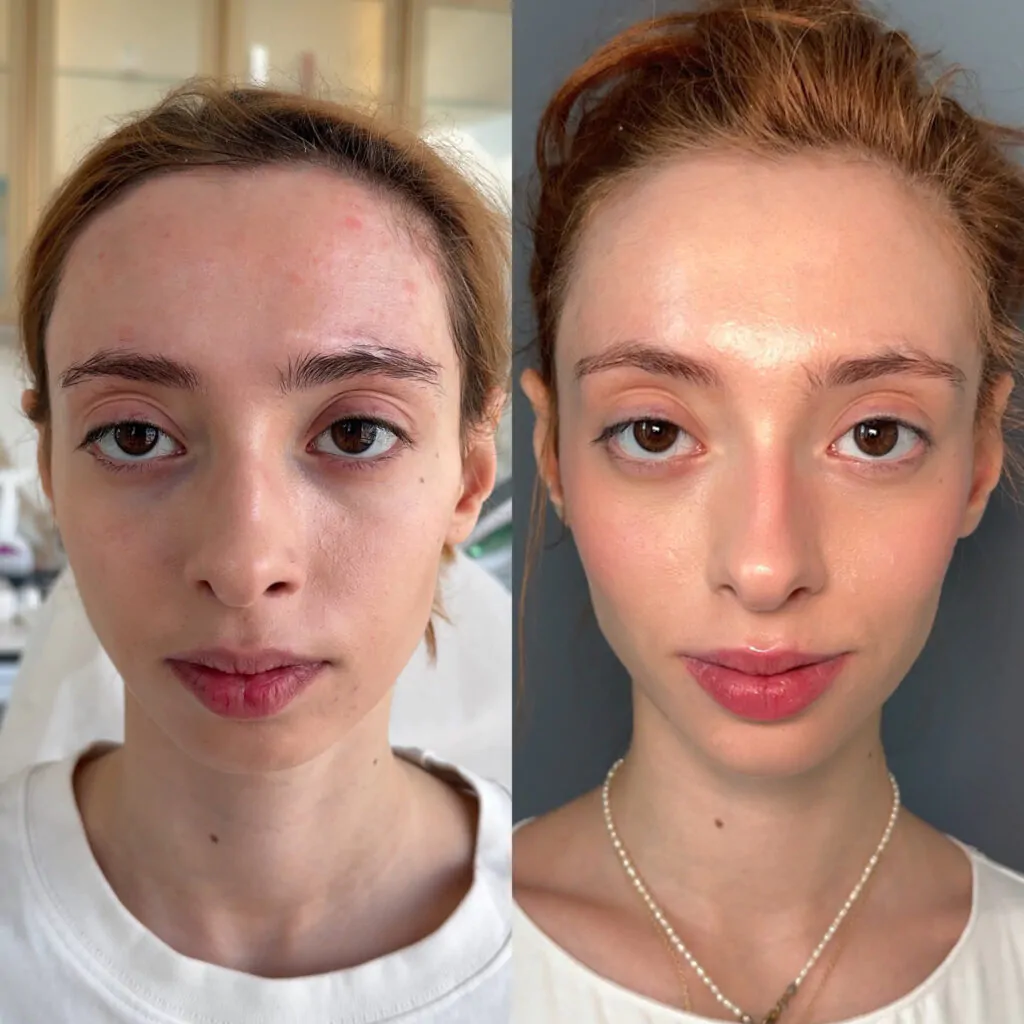
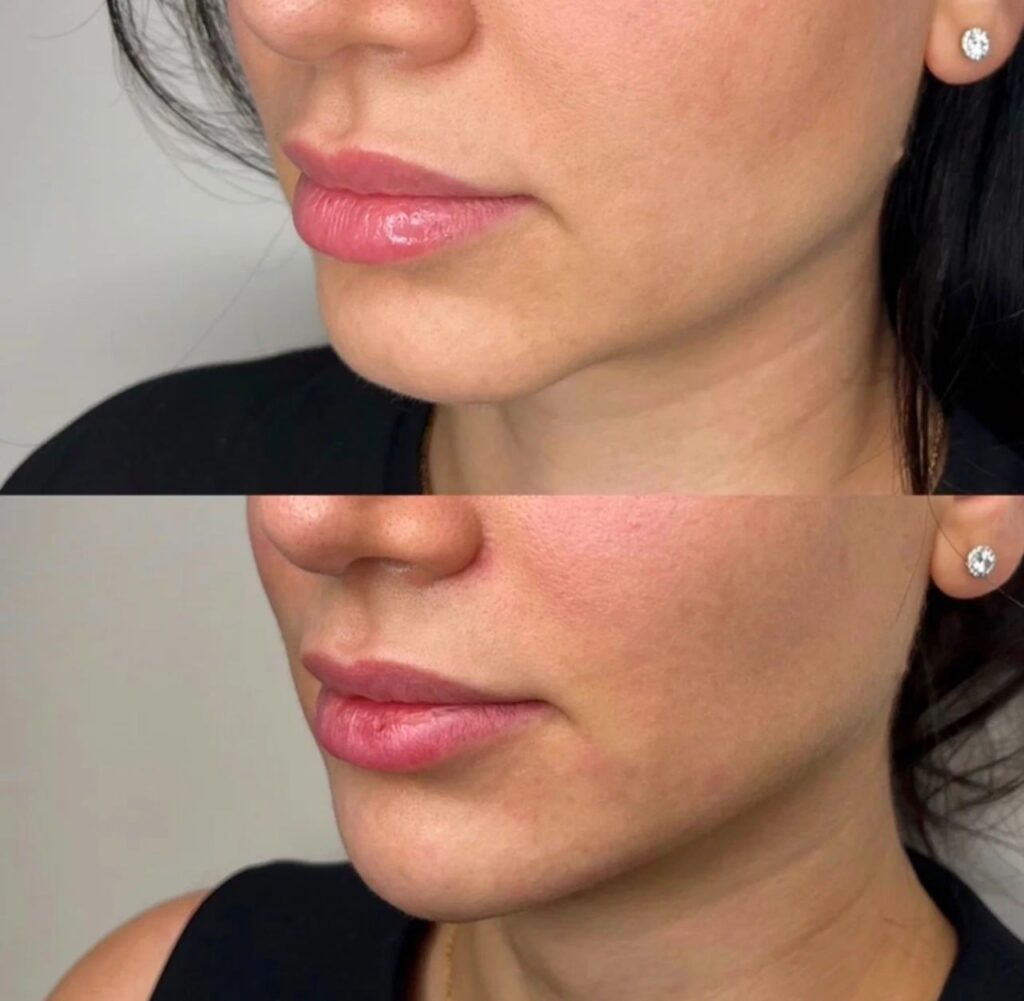
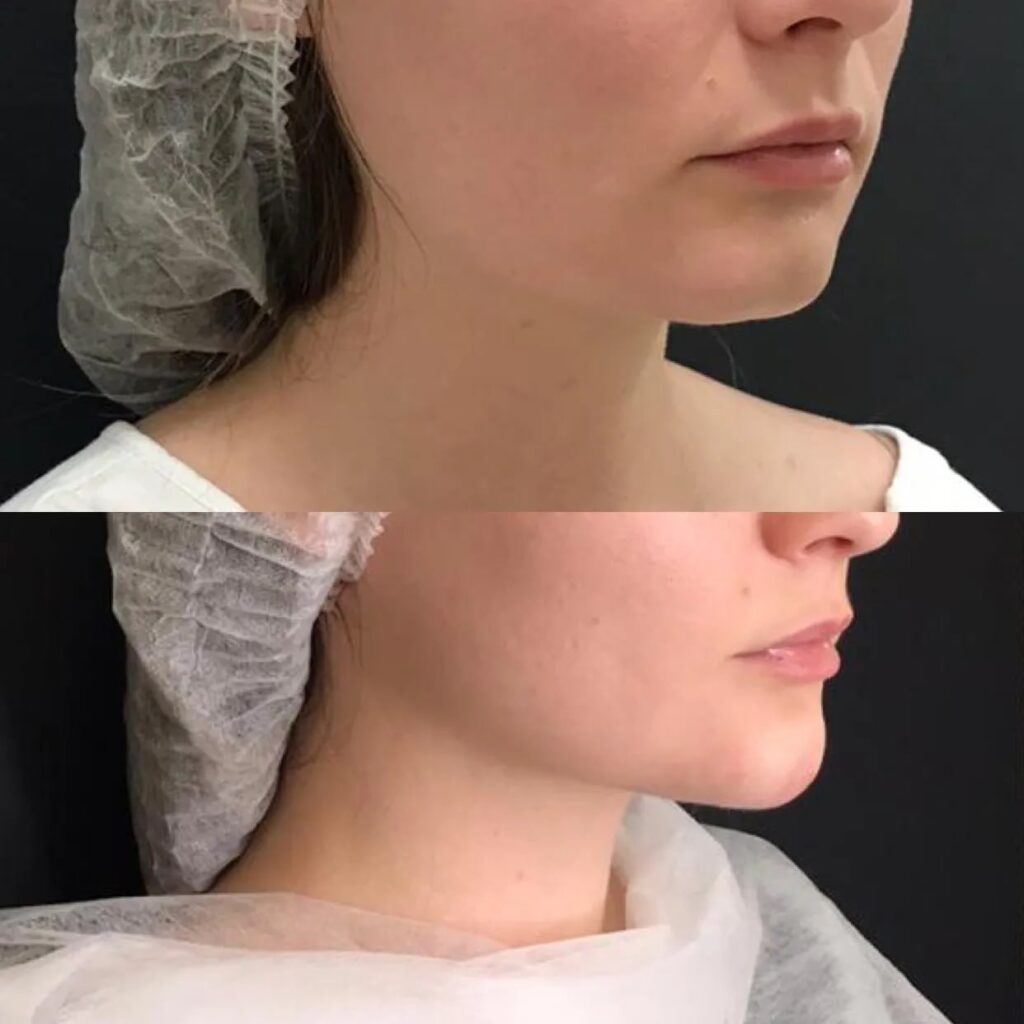
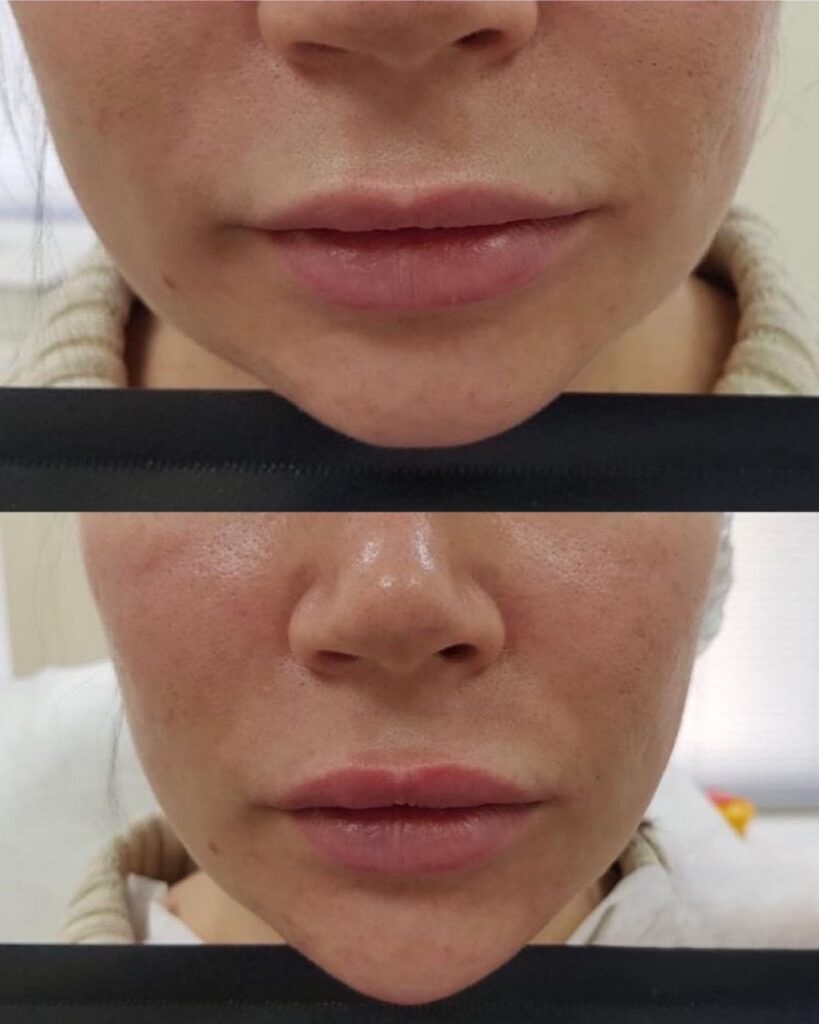
Before and After Chin Filler Treatment
Immediately following chin filler treatment, mild swelling and redness are expected and typically resolve within a few days. The final result develops gradually as the hyaluronic acid filler integrates with surrounding tissue, with full chin definition becoming visible over one to three weeks.
Patients with a weak or recessed profile frequently notice the most significant change in their facial profile. Projection improves, the appearance of a double chin may reduce, and the lower face achieves a more structured, well-proportioned look suited to the individual’s natural anatomy.
Key treatment benefits:
- Improved projection and lower facial proportion
- Reduction in the appearance of a double chin
- Defined contour achieved without surgical augmentation
- Naturally integrated results that develop over time
What is a Chin Filler?
Chin filler is a non-surgical treatment in which hyaluronic acid filler is injected into specific areas of the chin to add volume, improve chin shape, or enhance chin projection. Hyaluronic acid is naturally present in the body, making it well-tolerated and, where necessary, reversible under clinical supervision.
Dermal filler injections into the treatment area provide structural support beneath the skin, filling areas of deficit and building definition where anatomy or age-related change has created a shortfall. The type of dermal filler used integrates with surrounding tissue, delivering subtle and measurable improvement in shape and overall profile.
The filler used at this clinic in London is a cohesive, cross-linked hyaluronic acid formulation selected for its capacity to withstand the mechanical forces present in the lower face. Unlike implants, there is no incision or general anaesthetic, making non-surgical augmentation a clinically practical alternative for many patients.
The Chin Filler Process: Step by Step
01
Initial Consultation
Dr. Ivan conducts a face-to-face consultation to assess concerns, discuss treatment goals, review medical history, and determine whether chin filler is clinically appropriate.
02
Clinical Assessment and Planning
The treatment area is assessed in relation to the full facial profile. Specific areas requiring volume, projection, or definition are identified and incorporated into a structured treatment plan.
03
Pre-treatment Preparation
Numbing cream is applied to the treatment area approximately 20 to 30 minutes before the procedure, ensuring patient comfort throughout each stage of treatment.
04
Treatment Delivery
Hyaluronic acid filler is injected into the chin using precise technique. Angelika works methodically across specific points to achieve the agreed treatment outcome.
05
Aftercare and Recovery Guidance
Post-treatment advice is provided covering swelling management, activity restrictions, and when to expect final results to become visible.
Procedure time: 30 to 45 minutes
Recovery: Mild swelling and tenderness typically resolve within three to five days.
Benefits of Chin Filler
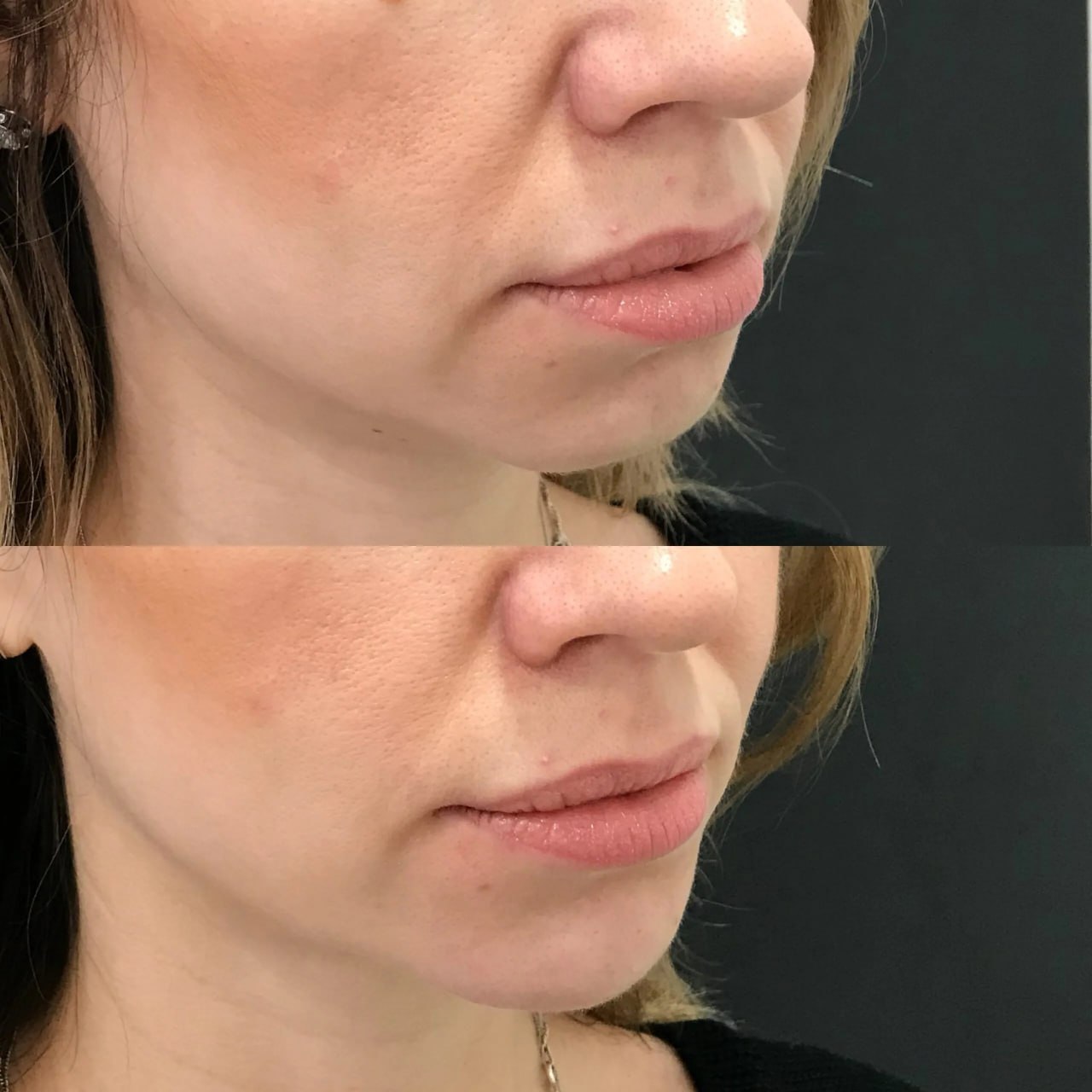
Non-surgical augmentation delivers meaningful aesthetic change without the downtime or risk profile associated with surgical procedures. For patients with a weak or recessed profile, dermal filler injections offer a carefully considered route to improved balance across the lower face and a more defined profile.
The benefits of this treatment extend beyond simple volume addition. Definition can contribute to a more structured jawline, influence how the nose reads in relation to the lower face, and reduce the visual impact of soft tissue laxity beneath the chin. Results appear gradual and naturally integrated.
A significant clinical advantage of hyaluronic acid filler in the chin area is its reversibility. Where an outcome does not meet expectations, the product can be dissolved, offering a degree of flexibility that surgical augmentation cannot provide. This makes non-surgical chin filler treatment a suitable starting point for a broader range of patients.
Key benefits of chin filler treatment:
- Enhanced chin projection without incisions or general anaesthetic
- Improved lower facial balance and well-proportioned chin contour
- Reduction in the appearance of a double chin
- Clinically reversible outcome using hyaluronidase where required
- Gradual, structured results suited to individual anatomy
- Minimal recovery period relative to surgical alternatives
Chin Filler Treatment Options
Focused Chin Projection
This approach targets the central area to improve forward projection and define the tip. It is suited to patients with a weak or recessed profile who require targeted structural support without broad contouring across surrounding areas.
Chin Contouring and Definition
A broader approach addressing multiple areas, including lateral definition and lower border refinement. This option suits patients seeking a more sculpted shape and improved facial symmetry, without requiring surgical augmentation.
Combined Chin and Jawline Treatment
This treatment plan combines chin filler with jawline dermal filler to address the full lower facial structure. It is clinically appropriate where concerns exist alongside broader jawline irregularity, volume loss, or asymmetry.
Treatment selection is guided by:
- The degree of chin projection deficit and underlying anatomy
- Whether the concern is primarily structural or age-related
- Overall facial proportions and profile balance
- Medical history and suitability for dermal filler treatment
- Patient preference for a subtle enhancement versus a more defined outcome
Why Choose Us?
Chin filler treatment is performed by Angelika, an aesthetic practitioner with over eight years of international medical experience and a clinical focus on subtle, structured results.
Her technique draws on advanced international methods, adapted to meet strict UK safety standards and the anatomical requirements of each individual patient.
Where prescription-only products are clinically appropriate, Dr. Ivan provides the face-to-face consultation and issues prescriptions following thorough clinical assessment.
This collaborative prescribing model reflects a commitment to governance and patient safety that goes beyond the minimum requirements for aesthetic practice in the UK.
Our approach to treatment at our London clinic is guided by:
- Anatomy-led treatment planning and thorough pre-treatment consultation
- Hyaluronic acid filler selected specifically for its suitability in the chin area
- Precise injection technique adapted to each patient’s individual structure
- Collaborative prescribing with GMC-registered prescriber Dr. Ivan
- Clear aftercare guidance and access to follow-up review
Disclaimer: Angelika is an aesthetic practitioner, not a medical doctor. Where prescription-only products are clinically appropriate, face-to-face consultation and prescribing are provided by GMC-registered prescriber Dr. Ivan.
Frequently Asked Questions
How long does chin filler last?
Chin filler results can vary between individuals depending on the type of dermal filler used, the volume injected, and individual metabolic factors. Most patients find that hyaluronic acid filler in London clinics maintains its effect for between twelve and eighteen months. Lifestyle, movement in the treatment region, and the specific filler used and individual factors all influence how long results persist. A follow-up consultation can assess whether a top-up or adjustment to the treatment plan is appropriate at that stage.
Is chin filler safe?
Dermal filler injections carry potential risks, as with any injectable treatment. These include temporary swelling, bruising, tenderness, and asymmetry. More serious complications such as vascular compromise are rare but clinically recognised, and their avoidance depends heavily on the practitioner’s anatomical knowledge and injection technique. At this London clinic, treatment planning and delivery are approached with a strong focus on precision and risk minimisation. All relevant considerations are discussed with patients during the consultation process before any treatment proceeds.
How much filler is needed for the chin?
The volume required depends on the extent of the concern, the patient’s anatomy, and the treatment goals established during consultation. A minor improvement in projection may require as little as 0.5ml, while more significant reshaping or correction of a recessed profile may involve 1ml to 1.5ml or more. The treating practitioner will recommend a volume based on clinical assessment rather than a fixed amount, ensuring the outcome remains proportionate to the individual’s facial structure and goals.
Does chin filler hurt?
Numbing cream is applied to the chin area prior to treatment, which significantly reduces discomfort during the procedure. Most patients describe a sensation of pressure or mild stinging at the injection site rather than acute pain. The area can be more sensitive than some other facial zones, and individual tolerance varies. The procedure is generally well-tolerated, and the routine application of a topical anaesthetic helps ensure that the experience remains manageable for the majority of patients attending our clinic in London.
Is there any downtime after chin filler treatment?
Recovery following treatment is generally minimal. Swelling, redness, and tenderness are expected in the days immediately following the procedure and typically resolve within three to five days. Bruising is possible and may take slightly longer to clear. Patients are advised to avoid strenuous exercise, alcohol, and excessive heat exposure for at least 24 to 48 hours after treatment. Most people are comfortable returning to their usual daily routine within a short period, making this filler in London a practical option for those with busy schedules.
Who is suitable for chin filler?
Suitable candidates are adults in good general health who have concerns relating to a weak chin profile, chin recession, or insufficient chin definition. This treatment is not appropriate for patients who are pregnant, breastfeeding, or have certain autoimmune conditions or active skin infections in the treatment area. Suitability is established through individual assessment of medical history, anatomy, and treatment goals during the consultation. Patients taking blood-thinning medication may need to discuss timing with their GP prior to proceeding with any injectable treatment.
When will I see the final result from chin filler?
Some improvement in projection may be visible immediately after treatment, though initial swelling can temporarily affect how the result appears. As swelling subsides over the following days, the true outcome begins to emerge with greater clarity. Final chin filler results are typically visible between one and three weeks after the procedure, once the hyaluronic acid has fully integrated with surrounding tissue. A review appointment can be arranged to assess the outcome and determine whether any refinement to the treatment is warranted.
Can chin filler be combined with other treatments?
Chin filler is frequently considered alongside options such as jawline dermal filler or lip filler, particularly where the clinical aim is broader lower facial balance. Any combination approach is discussed during consultation to ensure the overall treatment plan is anatomically coherent and clinically appropriate. Not all combinations are suitable for every patient, and where multiple areas are to be treated, the sequence may be staged to allow proper assessment at each stage. The practitioner will advise based on individual anatomy and established treatment priorities.